We’ve been away from home in Yakima, WA for 2.5 weeks now which makes this the longest time away for me from the US since my study-abroad in college almost 20 years ago.
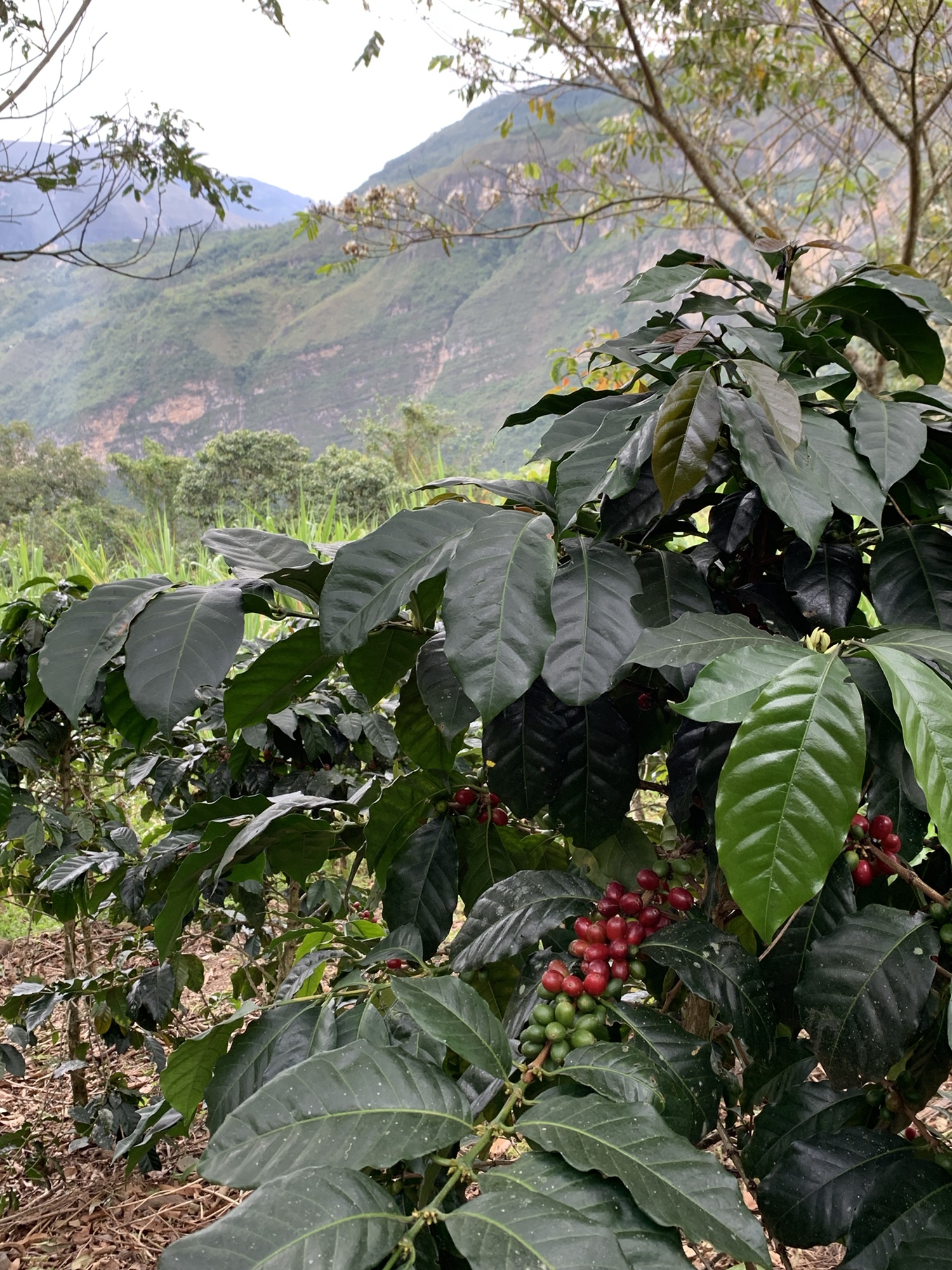
It’s taken me a few weeks to get my bearings. And to slowly rid myself of the notion that my value is based on what I produce… We are a productive family in the US, 20+ patients per day for me at the clinic, Erin working with her med students and staff at PNWU, soccer, ballet, baseball, cello lessons, rental house repairs, yard work, etc, etc. Here, in Northern Peru, we get up, have a “continental Peruvian breakfast” generally bread and cheese and ham along with some fruit, some days go to an ancient ruin or hike to a waterfall, then figure out where we’ll have lunch. Tip the taxi driver. Breathe in the smell of eucalyptus trees growing outside the room we’re staying. Don’t get me wrong, there are hardships, such as a decent cup of coffee – most people drink instant Nescafe and the good south american coffee is exported…
Simon told me yesterday that he’s a little sad that this is longest time I’ll get to be off work and do things with him during the whole summer…
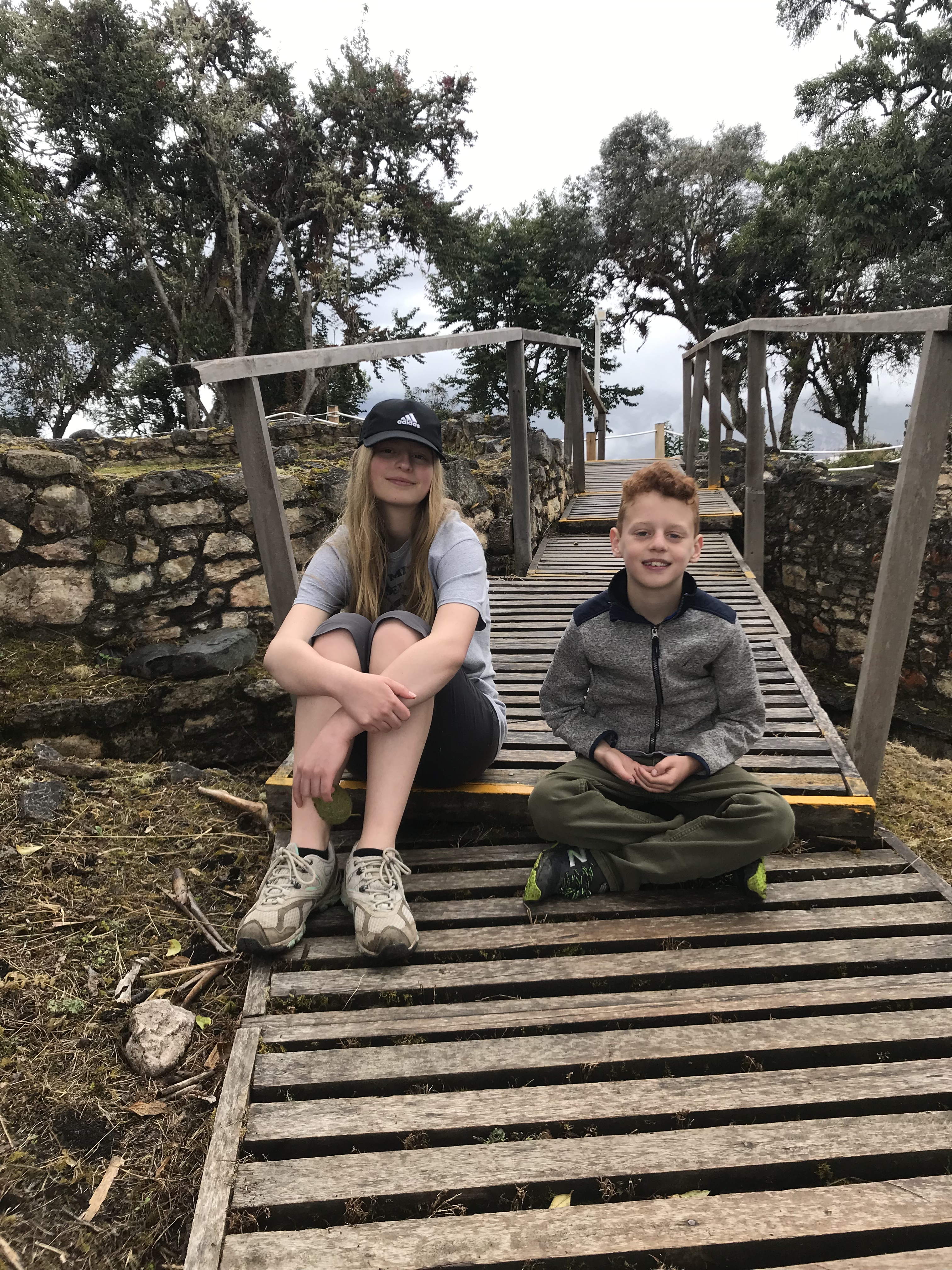
Eloise said that she enjoys traveling in order to see how others live.
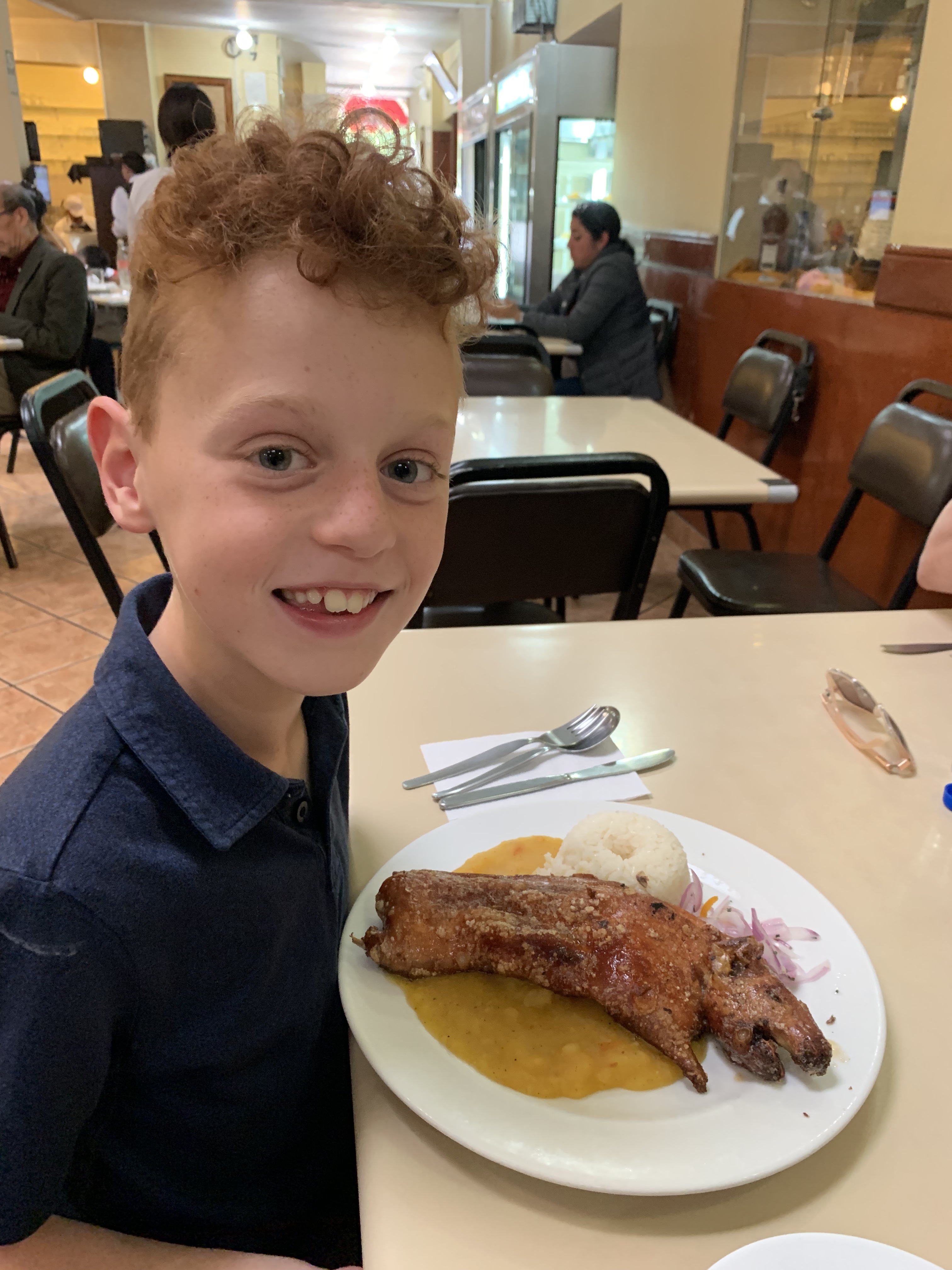
George likes to try new foods be it Cuy (guinea pig) or soups with chicken feet in it…
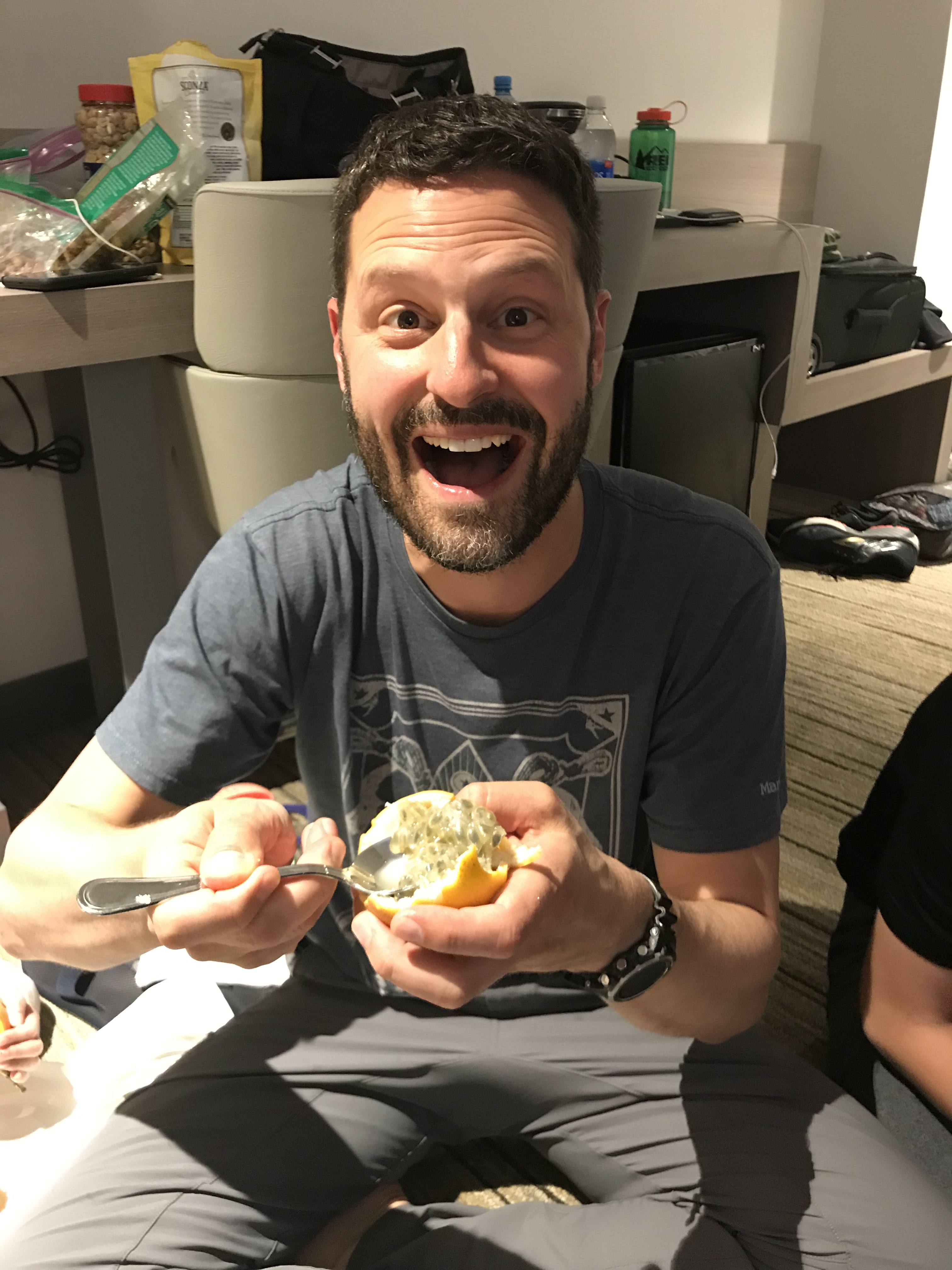
Beatrice just wants some more Maracuya (passion fruit).
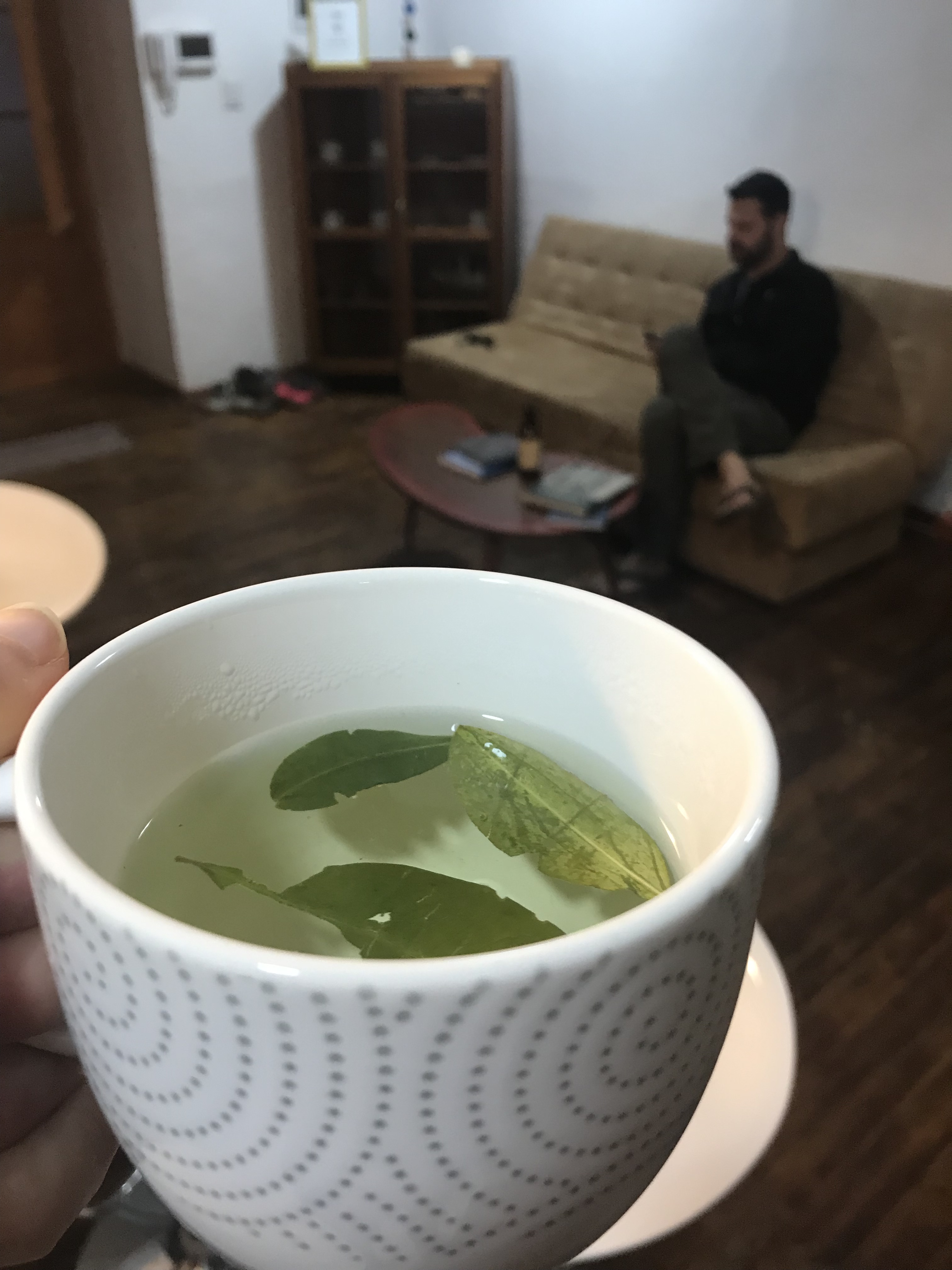
I am travelling this summer to gain a fresh perspective. It’s easy to get in ruts in life wherever we are – whether it be mental, spiritual, or physical. I enjoy the community in Yakima that I am apart of. We have better friends than we have ever had. I also want to be fully present with my family – my wife and kids and sometimes my attention gets crowded out by the business that is just part of life. When I speak with taxi drivers who are supporting 4 kids on less than 30 dollars per day, or the university professor who works in Chachapoyas, a 12 hour bus ride away from his family, and only sees his family 3 times per year, it’s pretty tough for me to complain about how busy I am or how hard I work…
I’ve had the chance to read several books this trip, one that I am reading now is Love Does, by Bob Goff. I’ll end by a quote in his book;
“God finds us in our failures and our successes, and He says that while we used to think one way about things, now He wants us to think another way about those same things. And for me, I’ve realized that I used to be afraid of failing at the things that really mattered to me, but now I’m more afraid of succeeding at the things that don’t matter.”
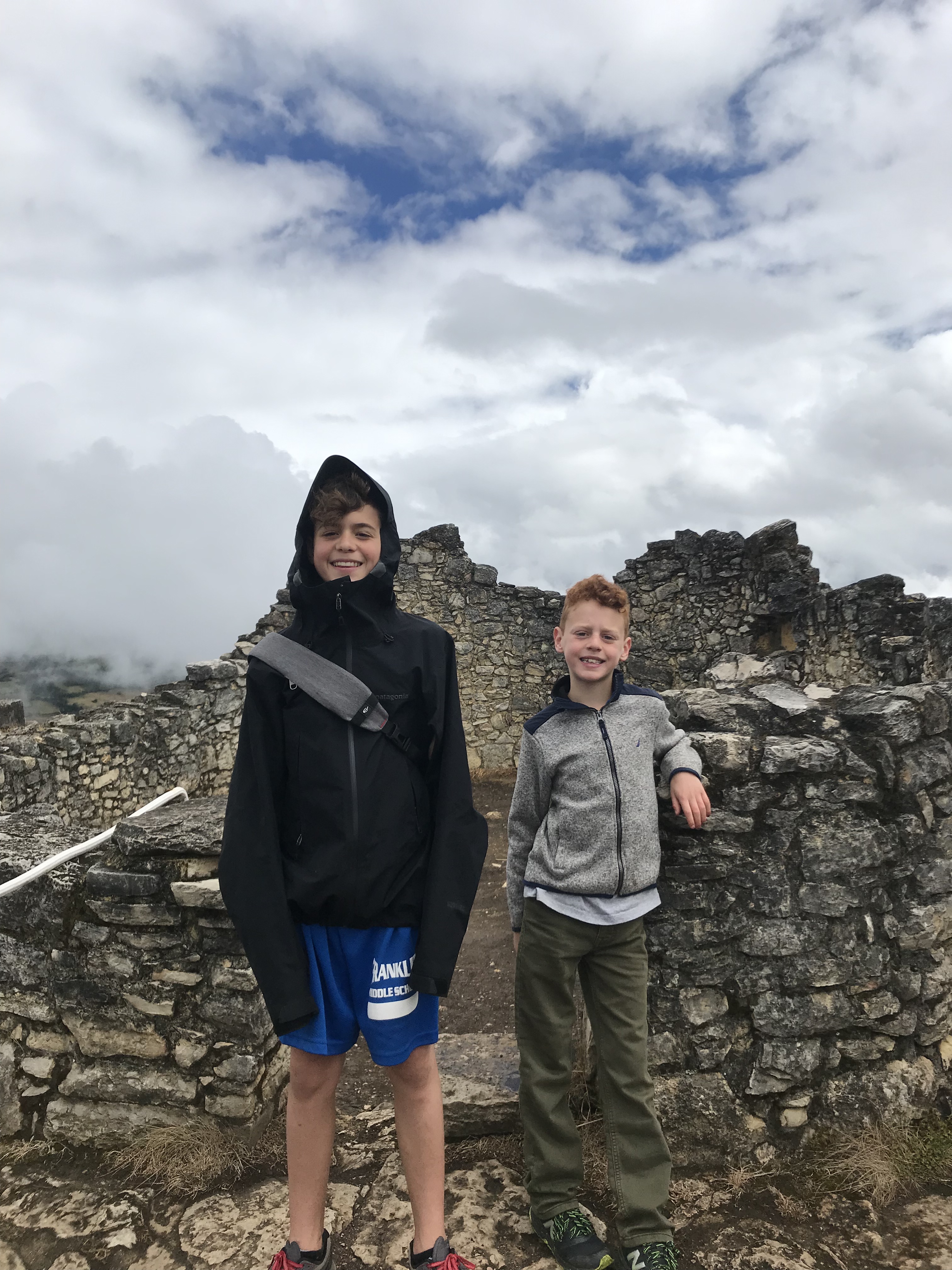
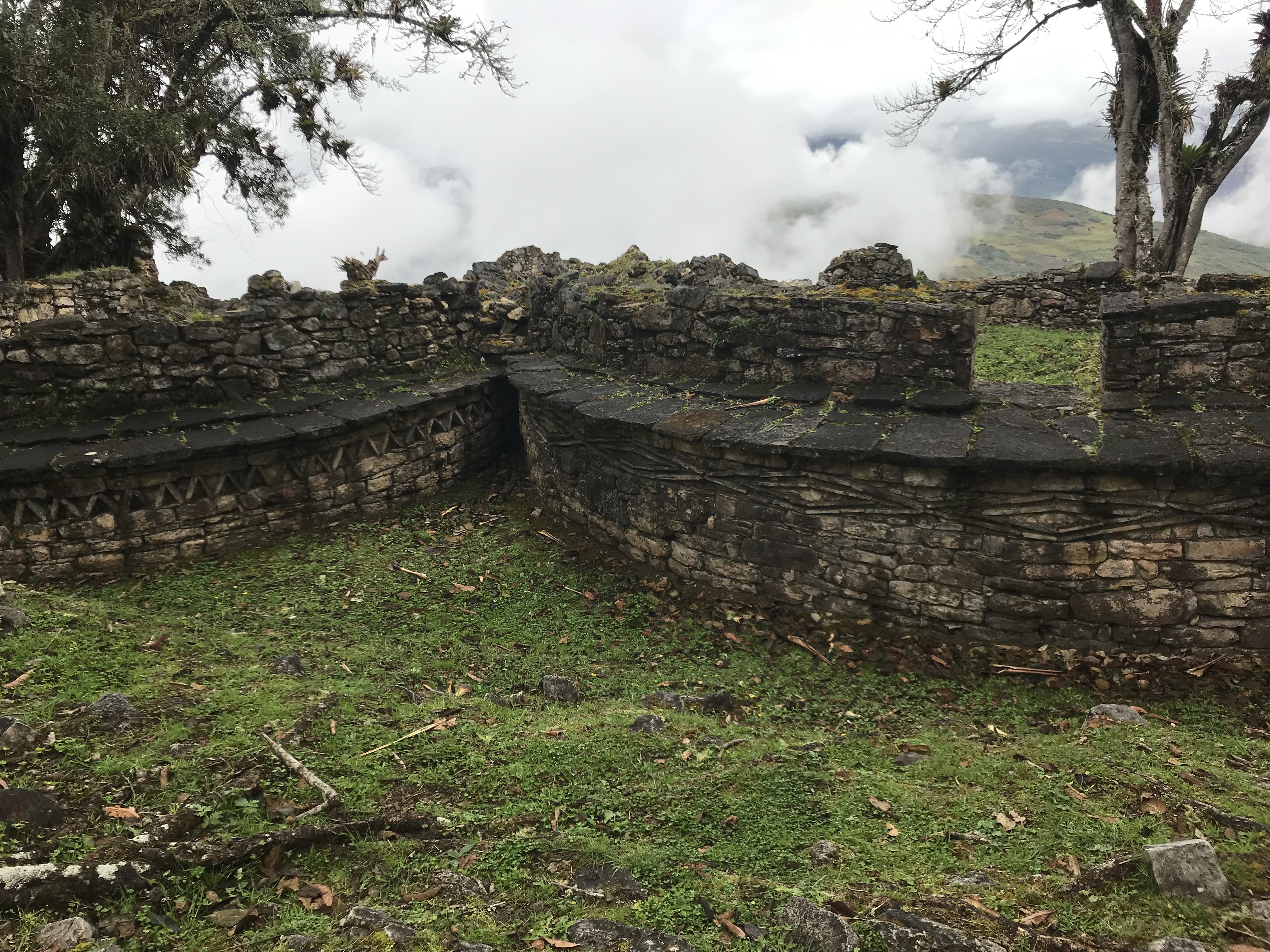
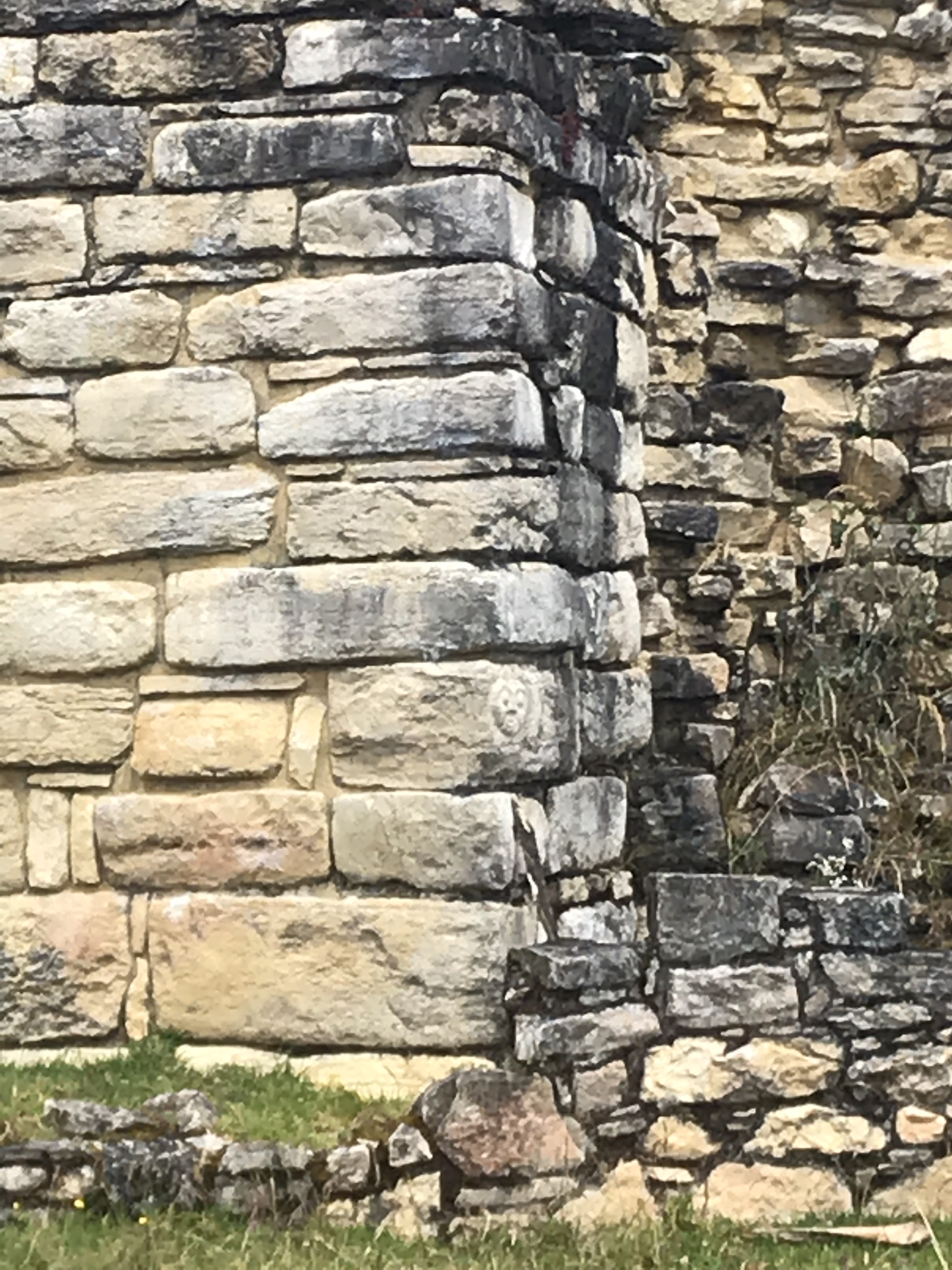
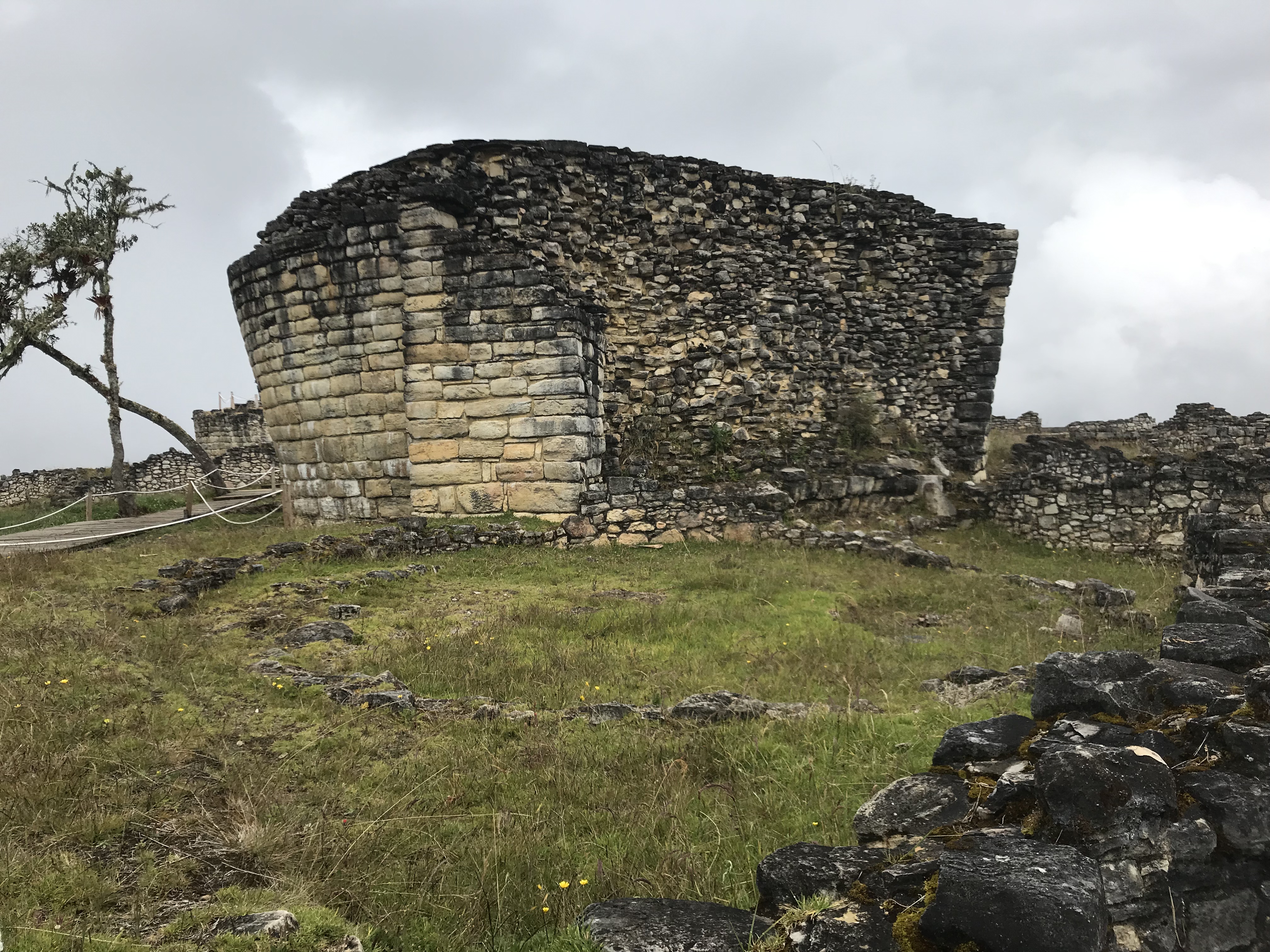
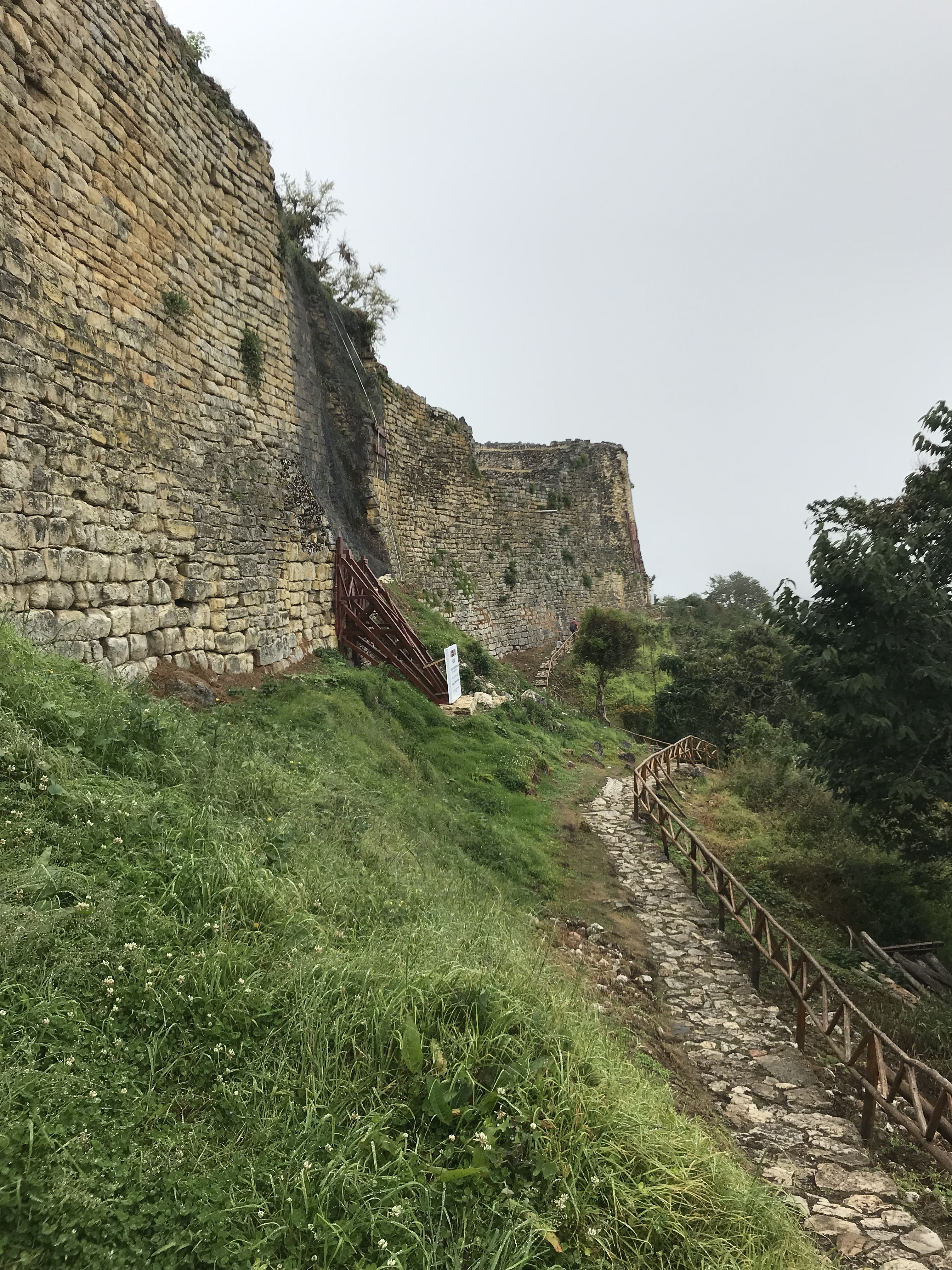
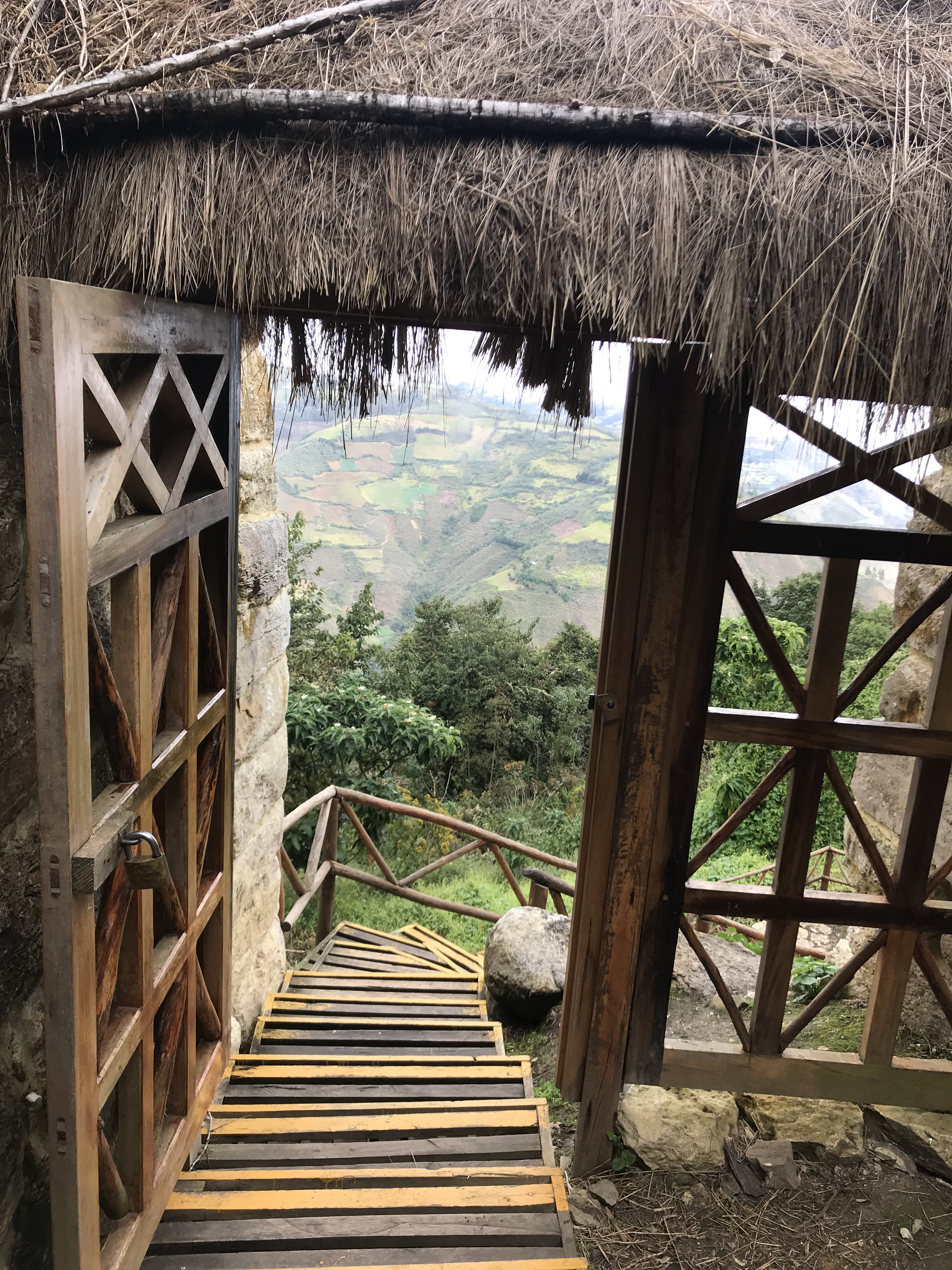
No, this isn’t a chapter you missed in Lord of the Rings. The Chachapoya culture that inhabited Keulap are often referred to as the Cloud Warriors. The name is well earned as their settlement was discovered in 1843 at almost 10,000 ft on top of a mountain in the north of Peru. And what a fantastic spot to build a city…
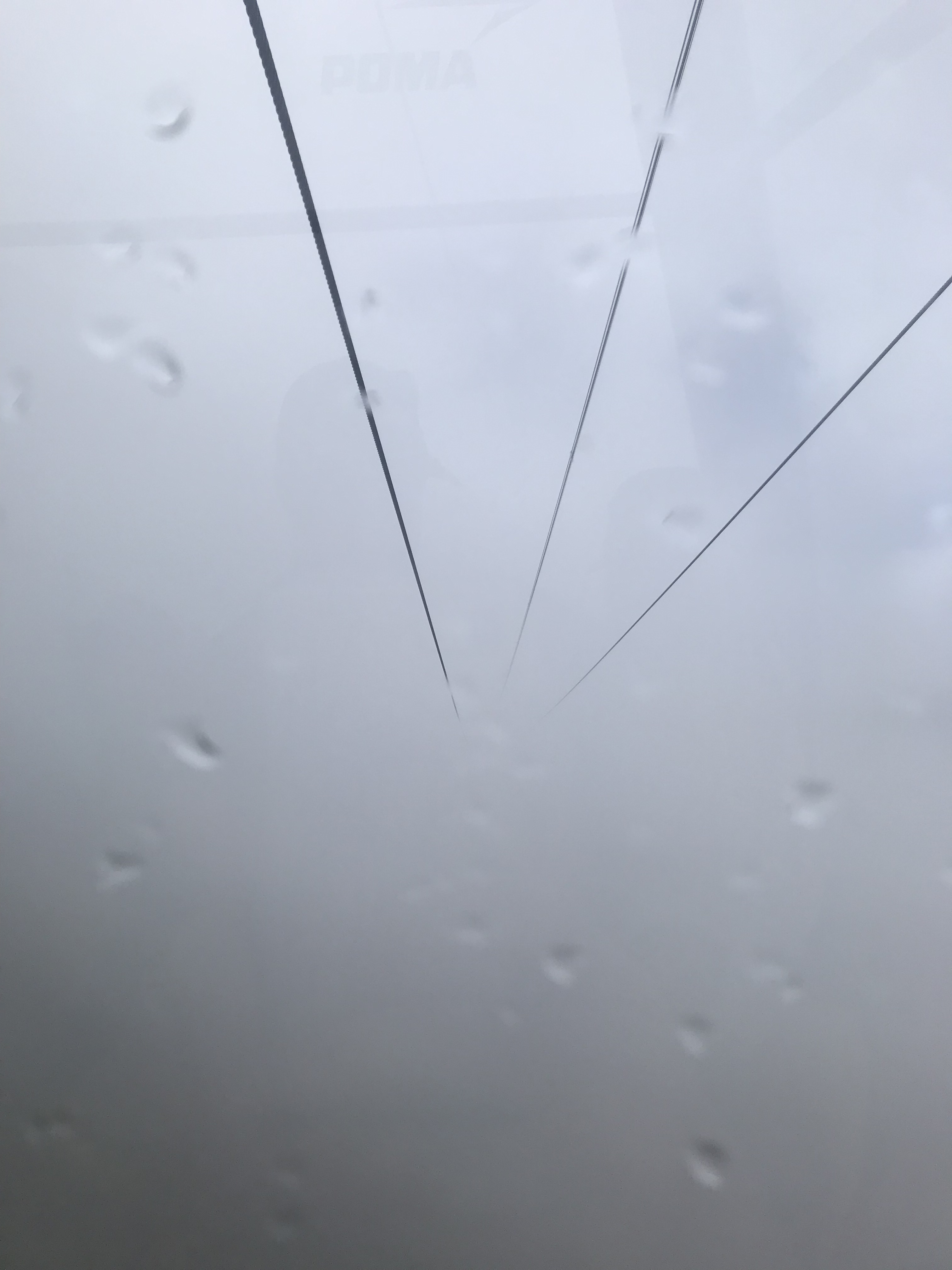
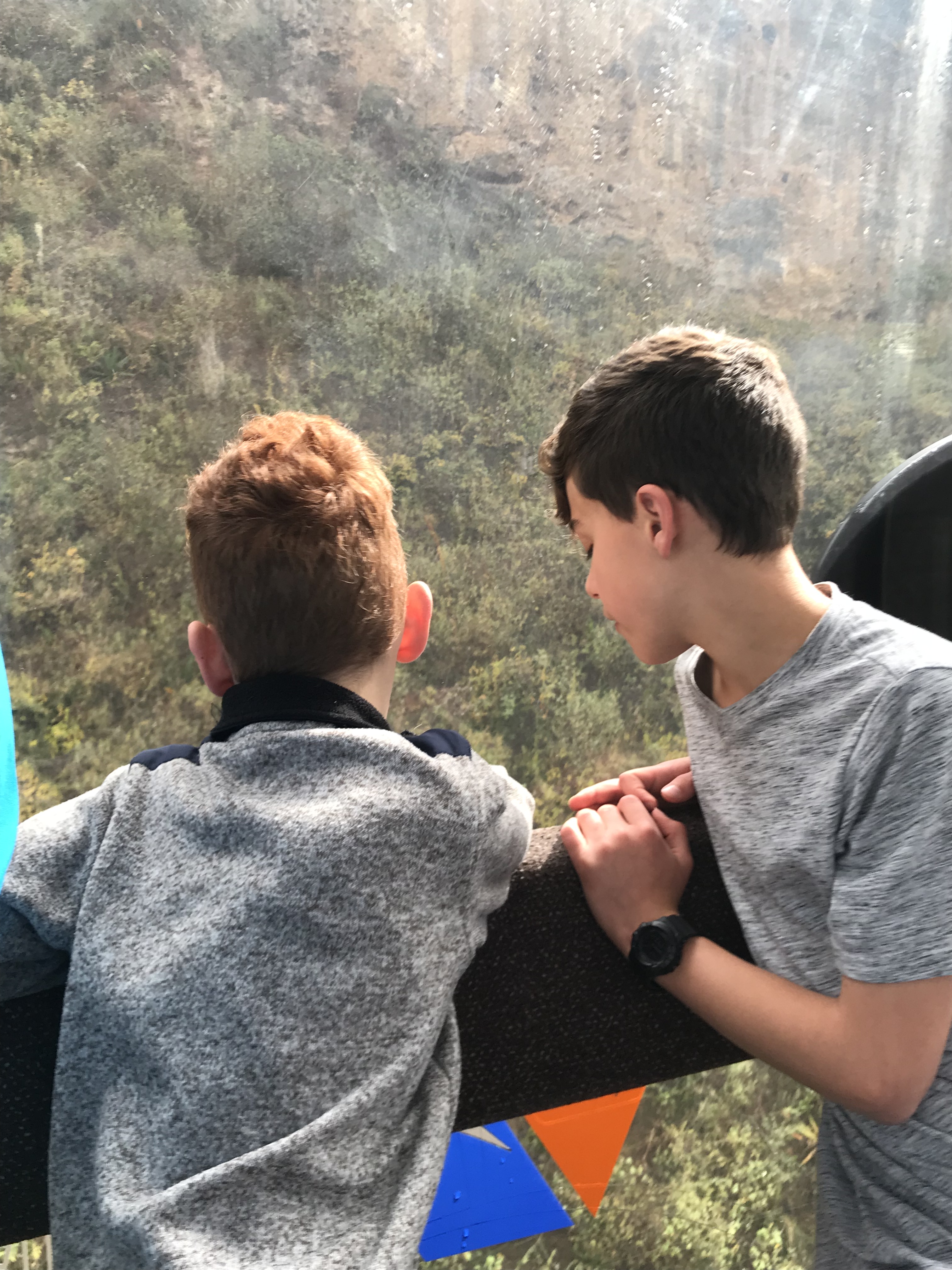
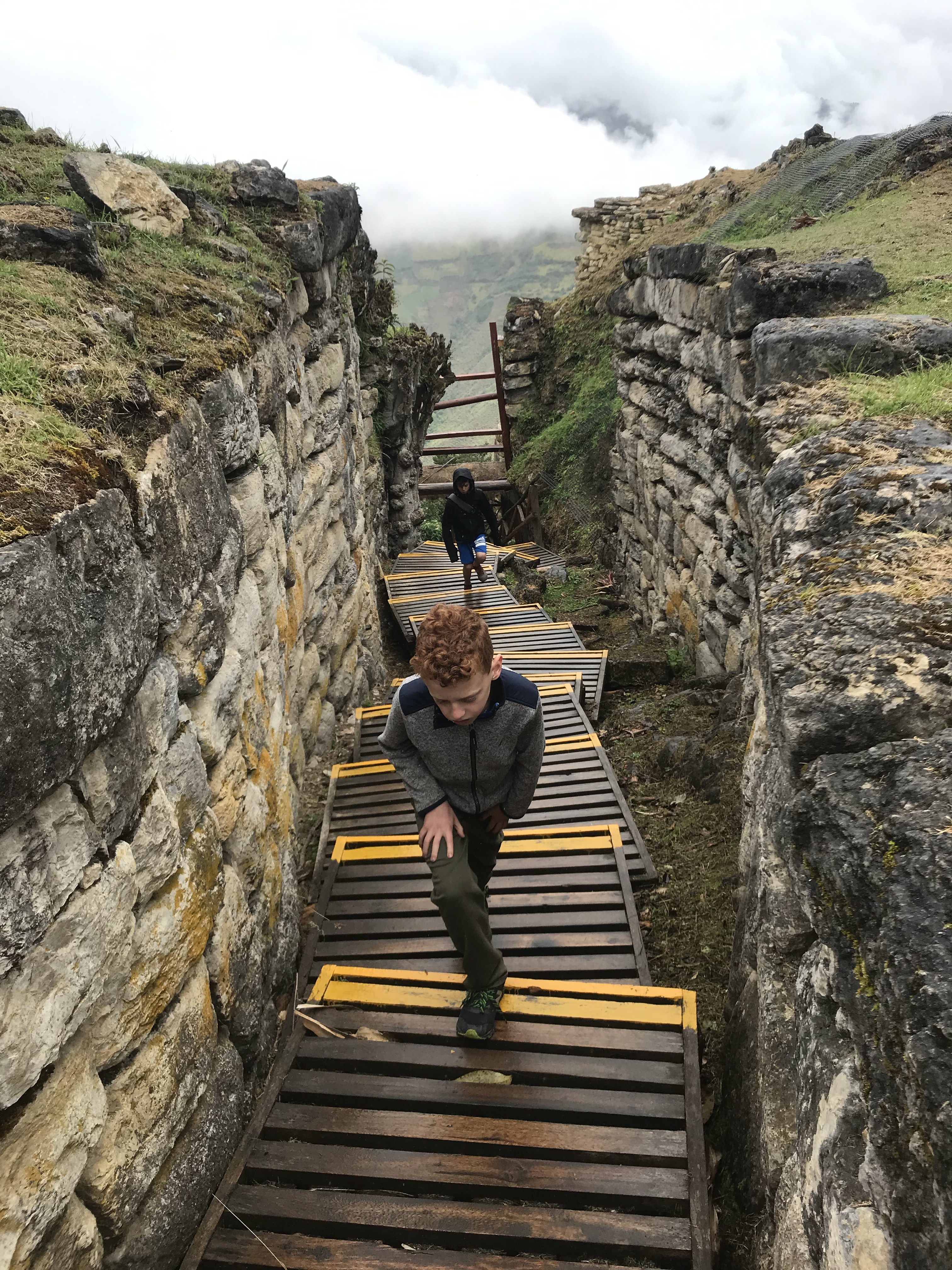
The easiest way to visit this high-mountain settlement is by cable car. The cable car system was installed in 2017 and takes visitors on a 20 minute vertiginous climb in and out of clouds. Wind whistles through the vents at the top of the car and rattles the doors, causing me to panic at my boys when they think it would be fun to bounce or stand or rock the car. Why are they the way they are?
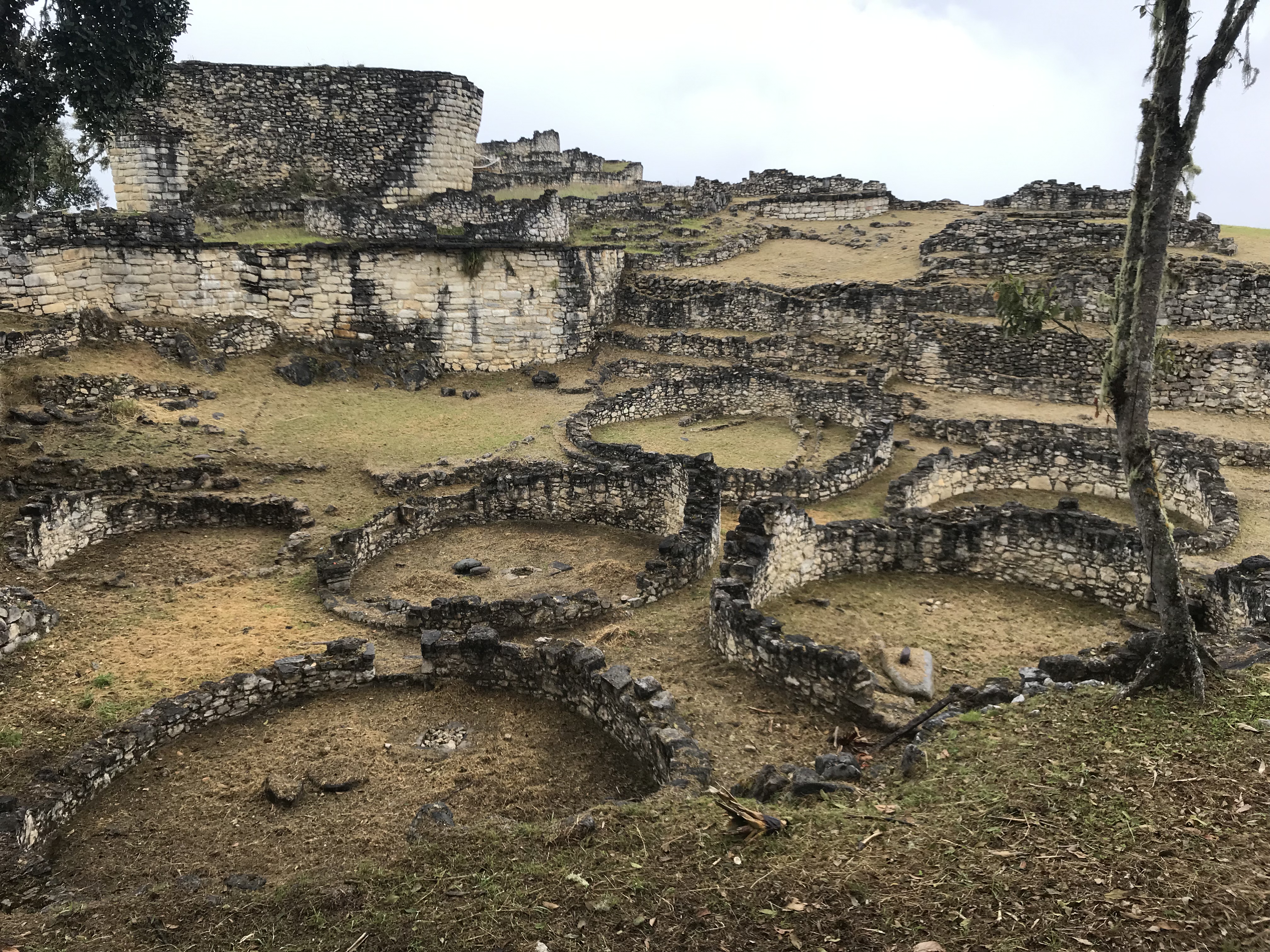
While the “Old World” was settling into the Middle Ages, the Chachapoyans were building temples and homes in the sky and farming the steep mountain side. Houses were built in little turrets and topped with a conical thatched roof.
More elaborate homes had beautiful stone work and the center temple had a face carved at the entrance and on the sides (a shaman or god?)
There is a lot of creepy speculation about all the human remains and mass graves that were found in this complex and at nearby sites. Large amounts of human remains are in the main temple in this site – human sacrifice? ritual burials? Historians think that they might have lived with their dead (small structures inside each home were filled with human bones) and believed that their ancestors had rich afterlife and could impact or empower the living.
Enclosing the whole compound was a 66 ft high wall with only 3 narrow entrances. The compound was highly defensible and took the Incans ~100years to finally conquer. The Incan practice of creating forced laborers (slaves, really) of their conquests might have inclined the Chachapoyans to side with the Spanish and aid the eventual overthrow of the Incans.
The whole site is breathtaking… you are above and in the clouds. All you would need is some pan-flute music and you could imagine people milling about, cooking up some guinea pig dinner and looking down the mountain for the kids to come home.
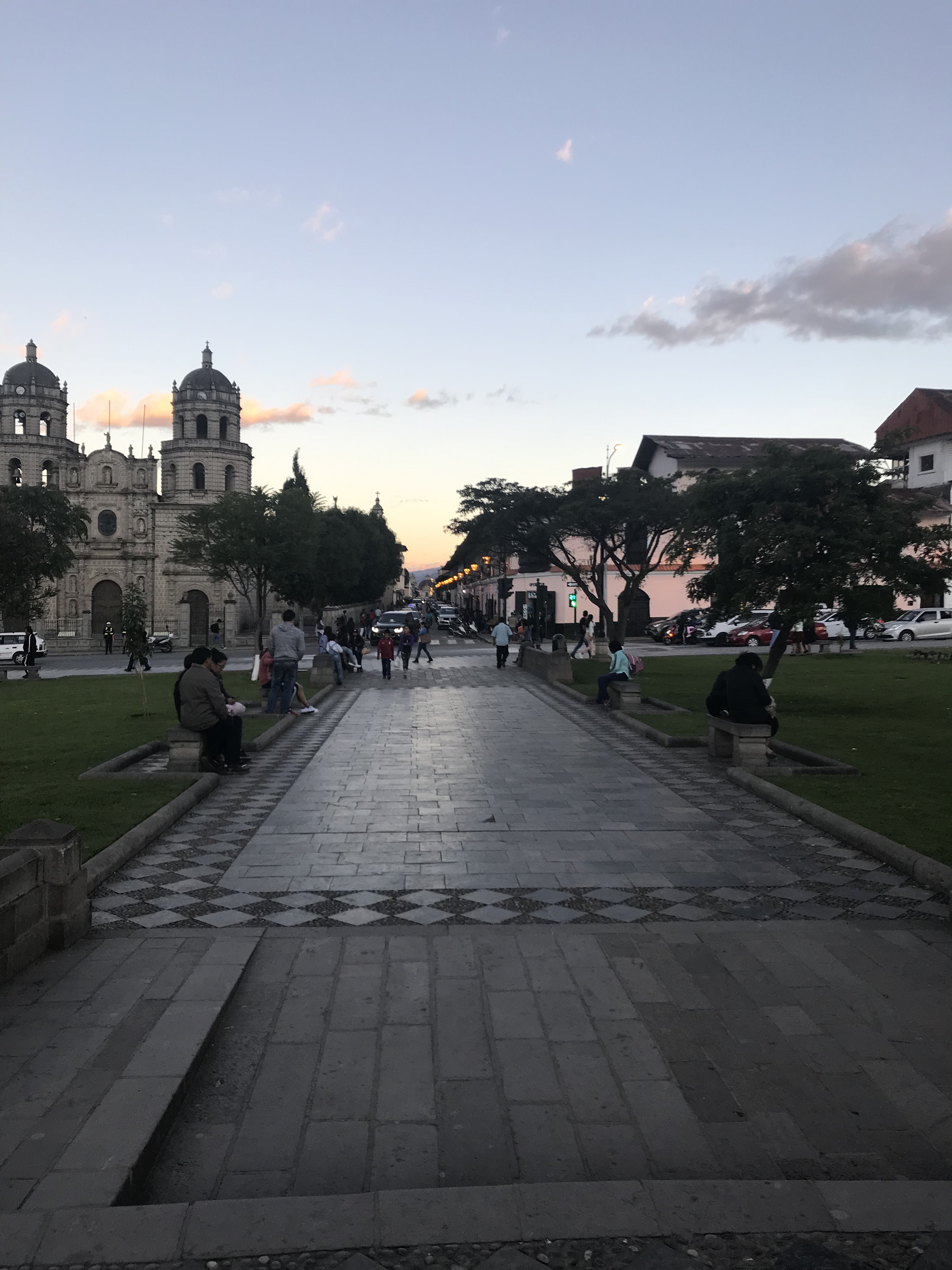
Our Air Bnb is right on the main plaza. We have front row seats the the surprising number of parades, processions, funerals and dance performances that seem to happen daily. And nightly. Bless my husband for bringing earplugs. Peruvian drivers also seem to use their horn just for the fun of it throughout the night.
Despite the brass bands playing into the night, we’ve enjoyed these regular community events and lament that our town doesn’t have a central plaza that brings people together for music, dance, and celebration.
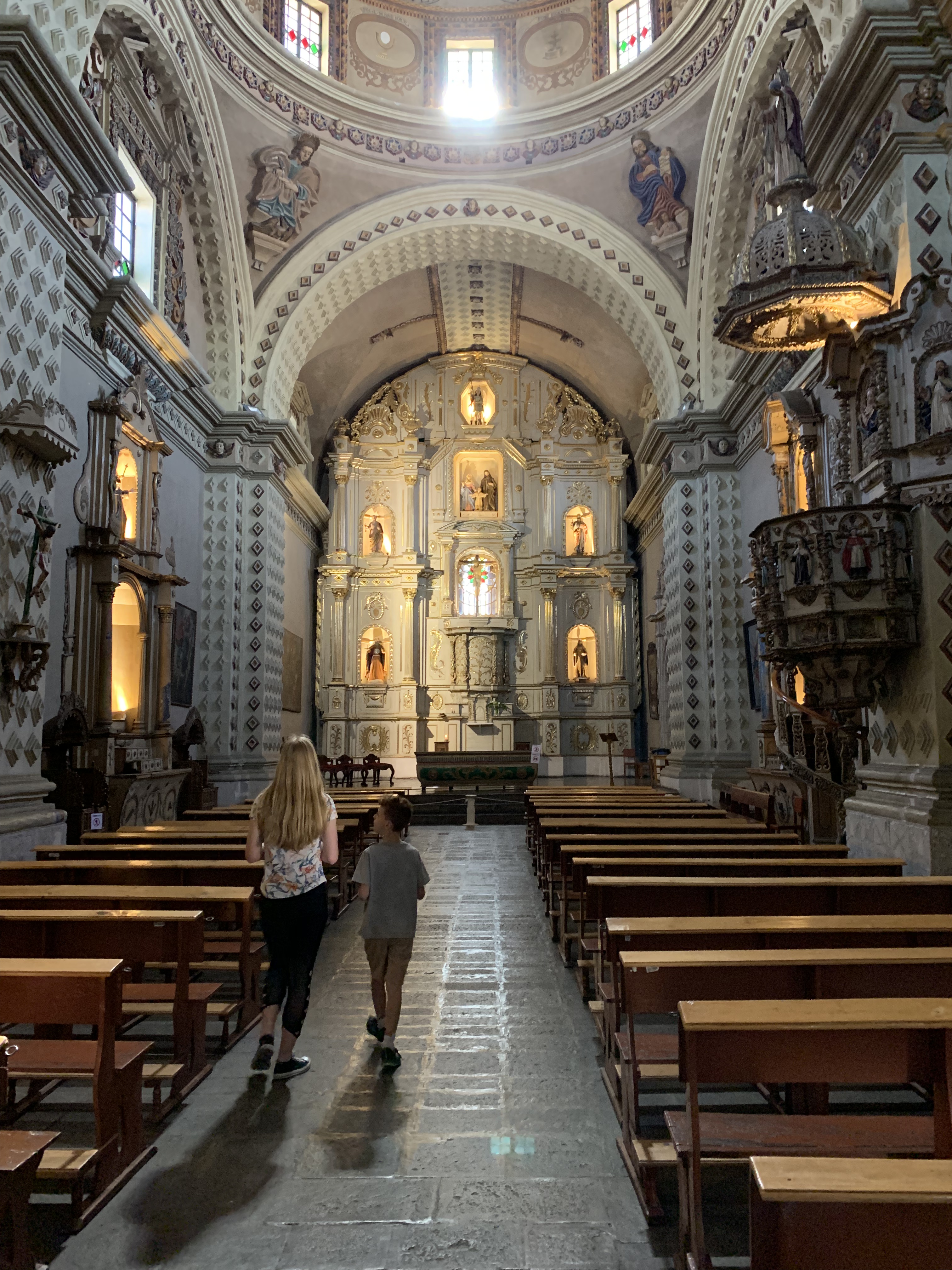
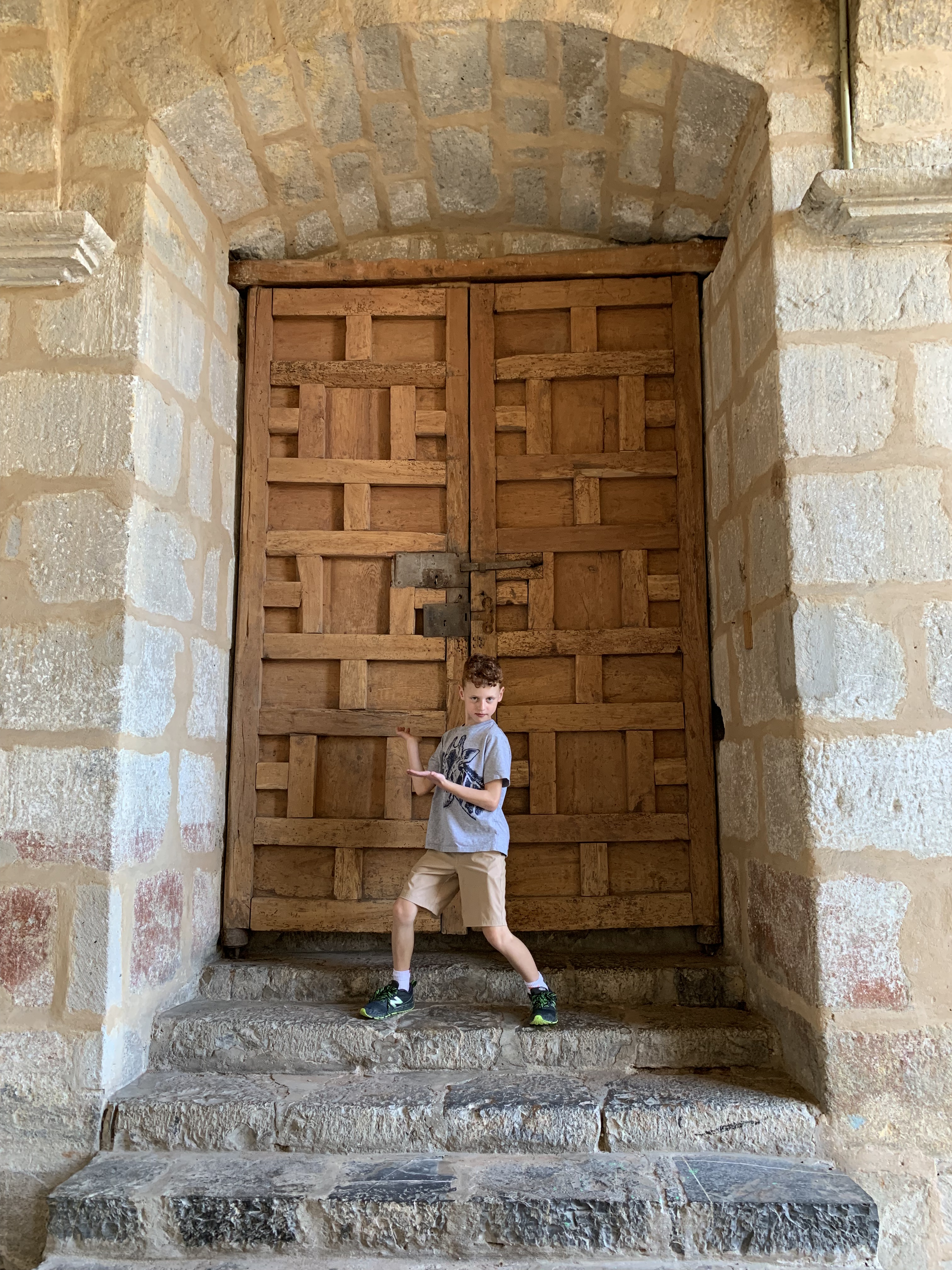
We are faithful tourists and have worked through the churches and historic sites.
George, “its just like Nacho Libre!”
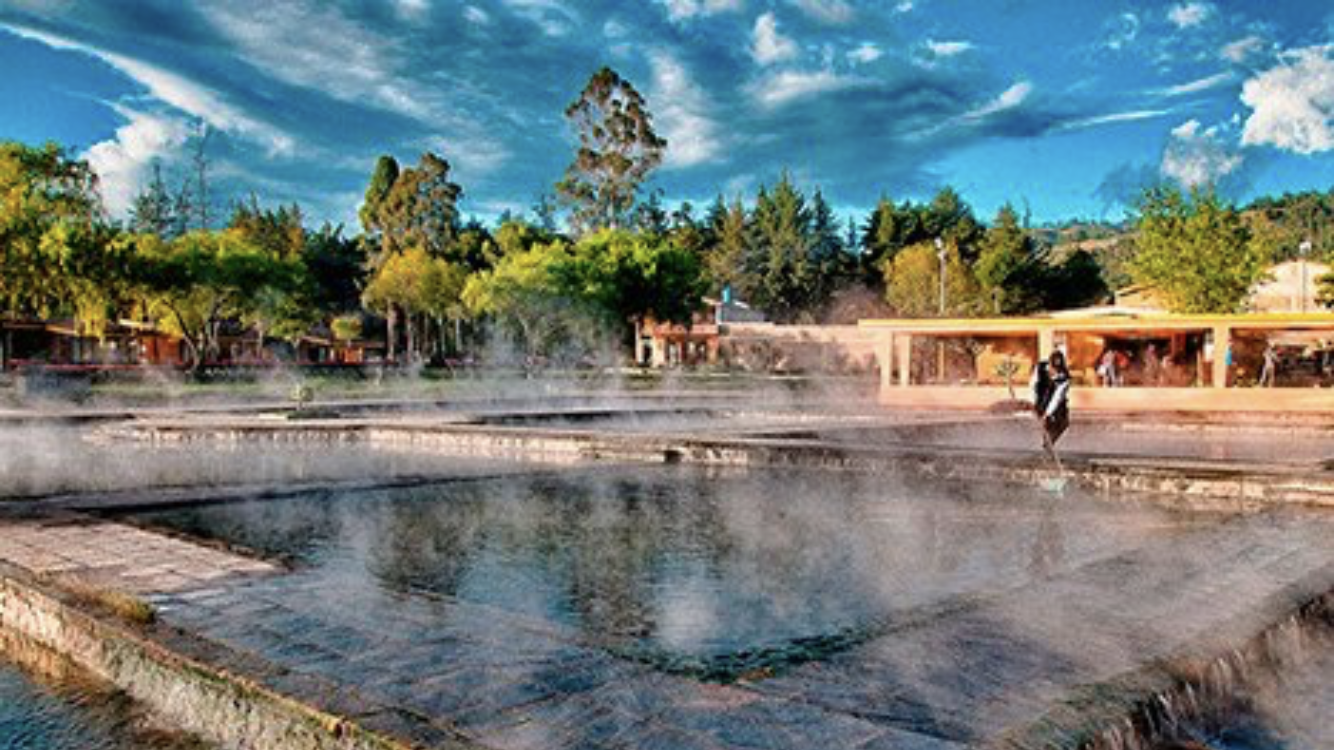
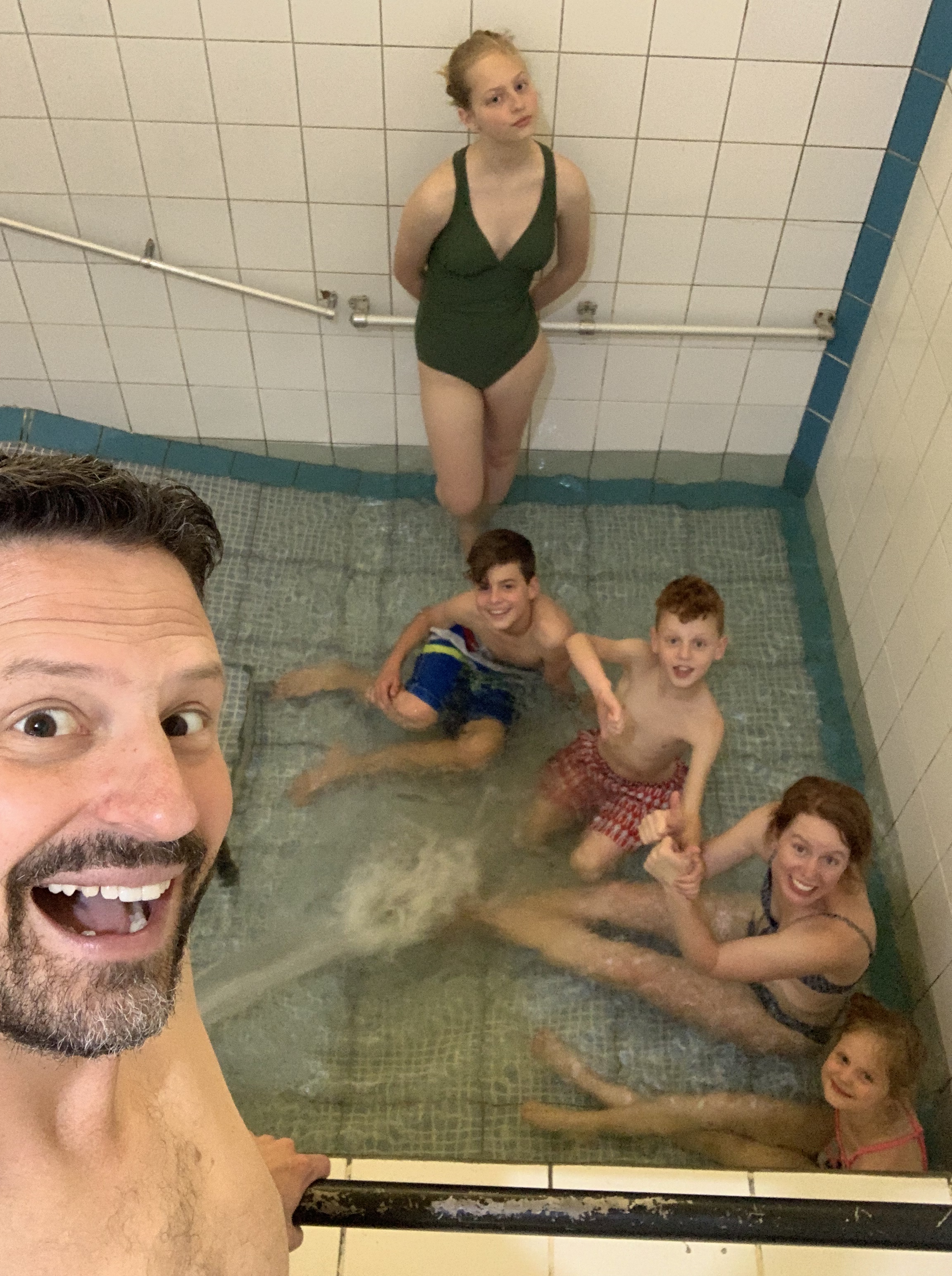
We didn’t miss the famed Incan baths that are fed from a hot spring. Spoiler-these aren’t as glamorous or “earthy” as they sound. Please compare the pictures from the guides on line with the reality.
Guides:
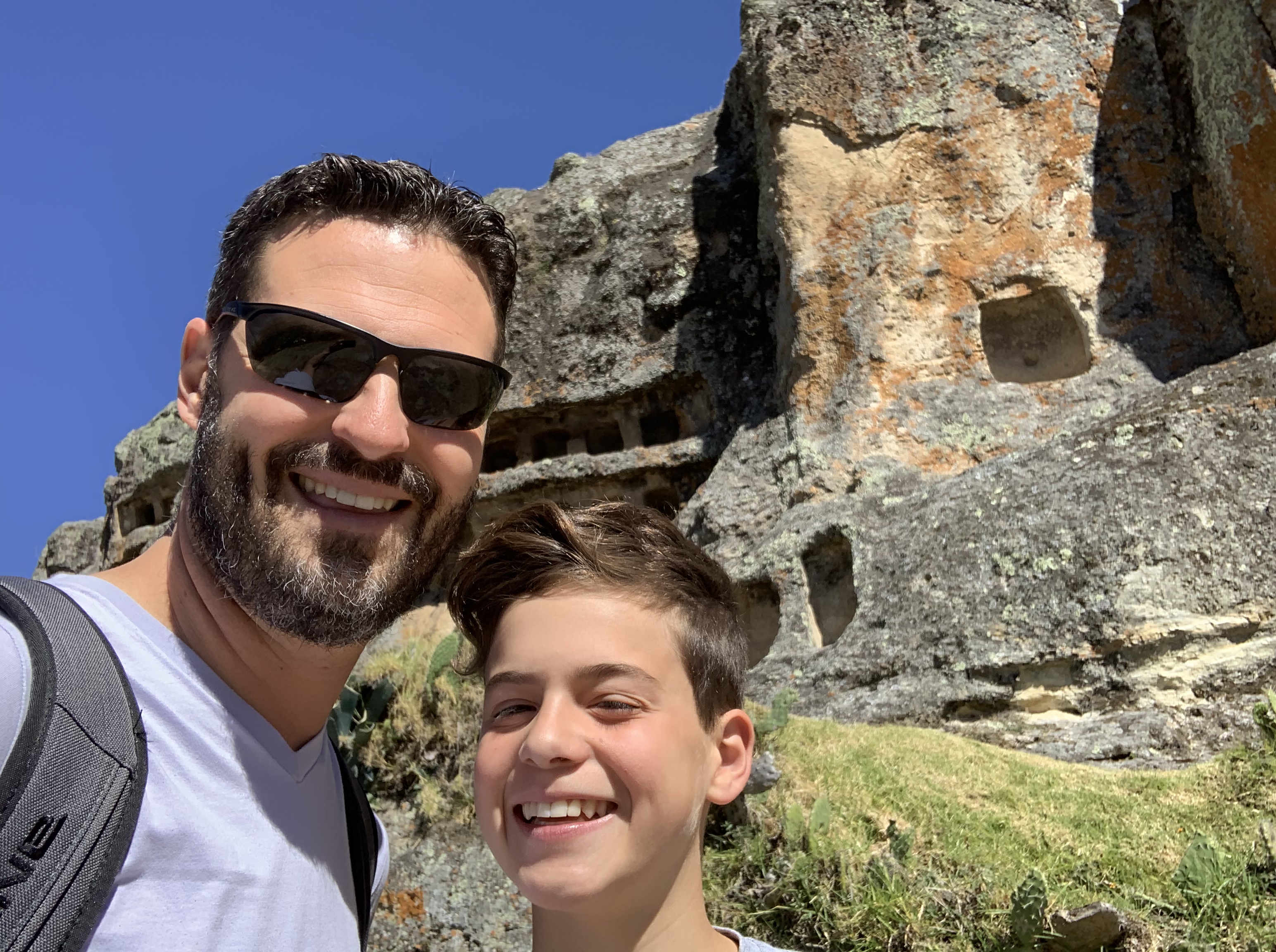
Reality: I loved the Ventanillas de Otuzco. Dating from 200-800 b.c. and the Cajamarca culture, these are considered a funerary complex. The dead were folded into a fetal position and placed in the niches in the volcanic stone.
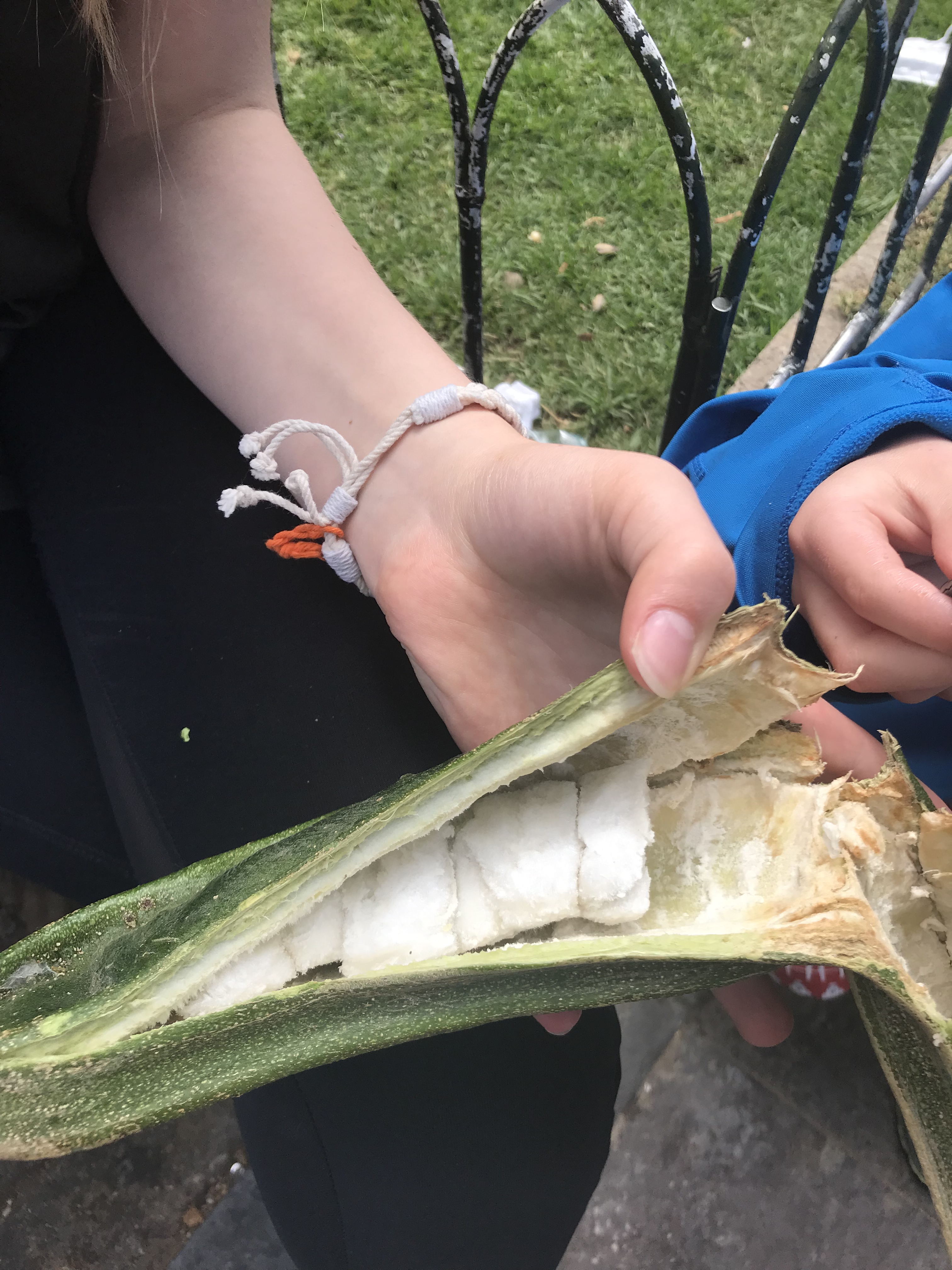
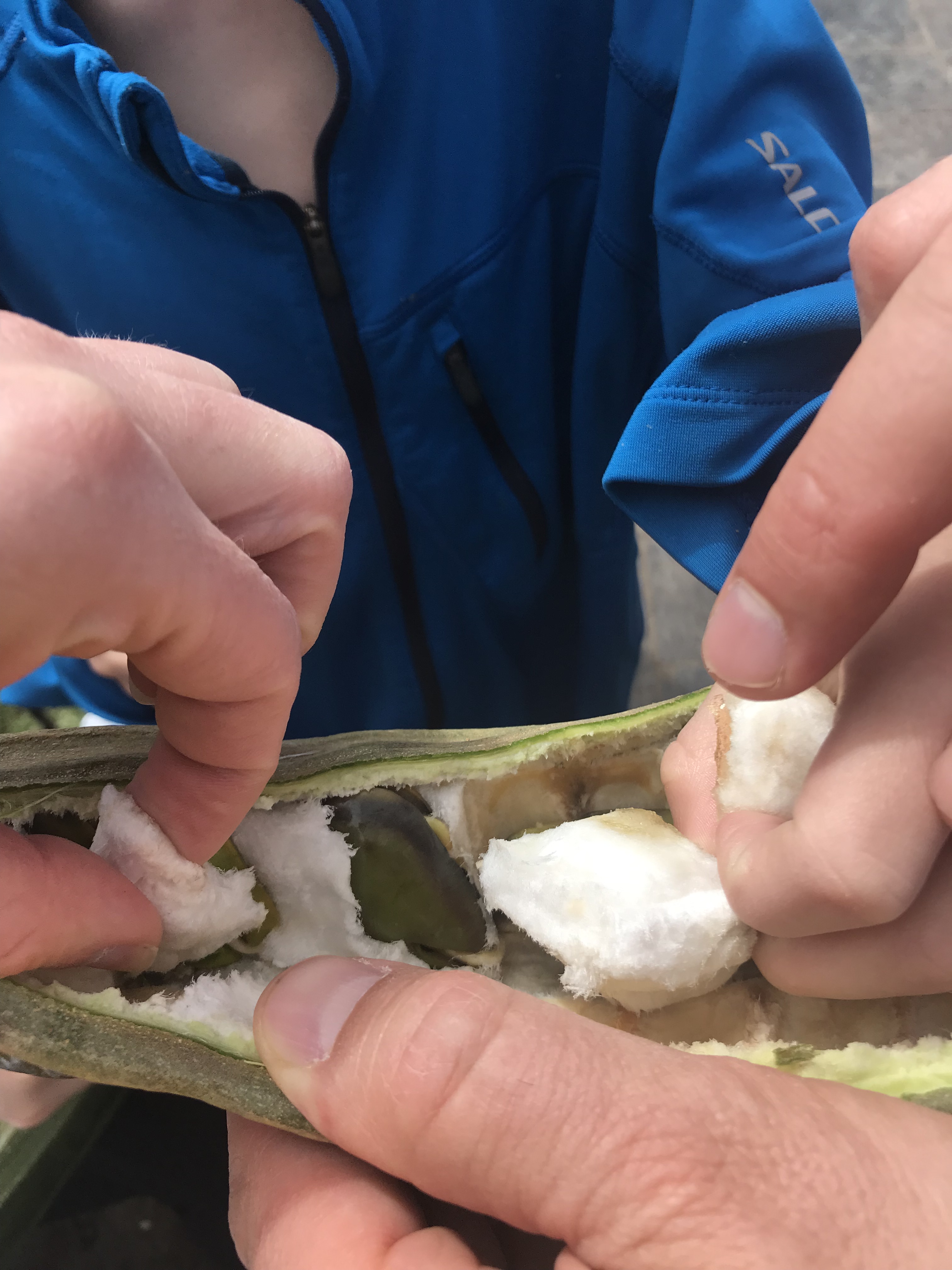
We continue to try every kind of fruit and delight in the novelty and variety! These are called Pacay (also known as the ice cream bean) and vendors slice and break open the long pods. Diners can pick the cotton candy like white pulp off the seeds.
For more protein in our diet, we opted for the menu del día today. The chicken soup was delicious, though none of us finished the meaty additions.
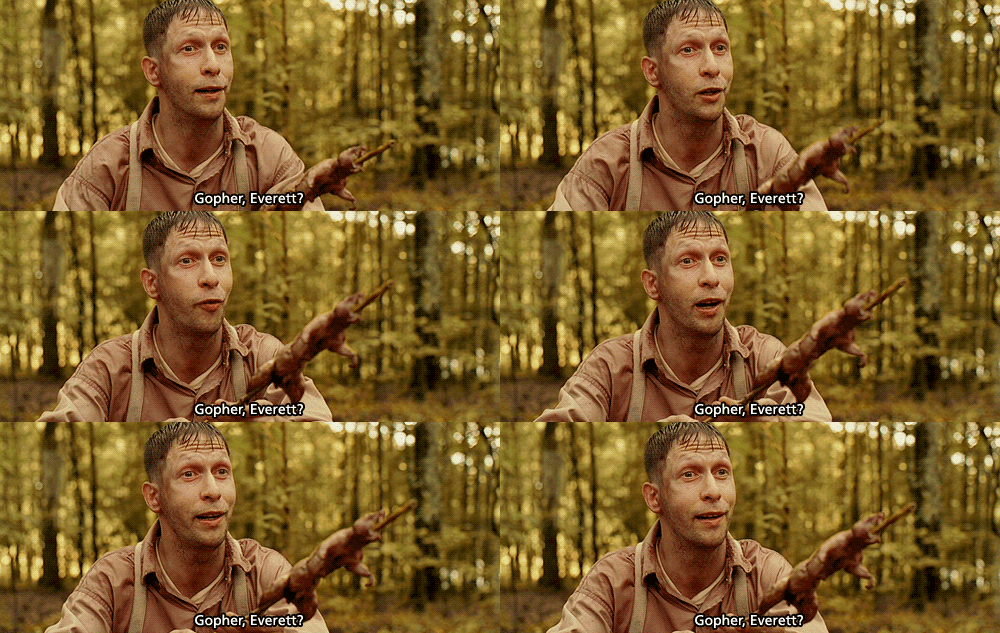
George astonished the Facebook world by eating a roasted guinea pig (cuy). We decided to give him a regular video bit on the blog to cover the tastes of South America!
George covers fruits more enthusiastically. This is him with passion fruit!
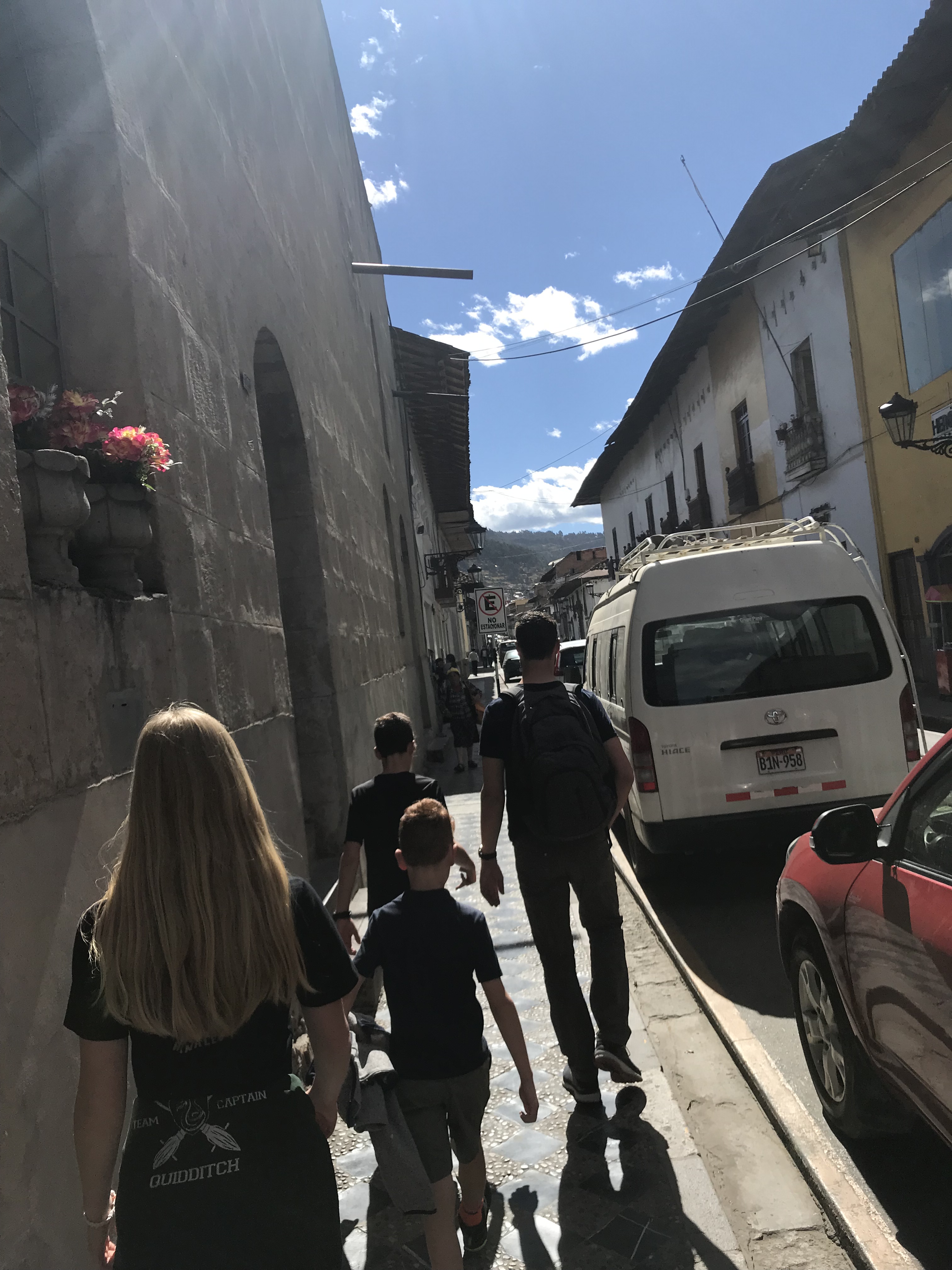
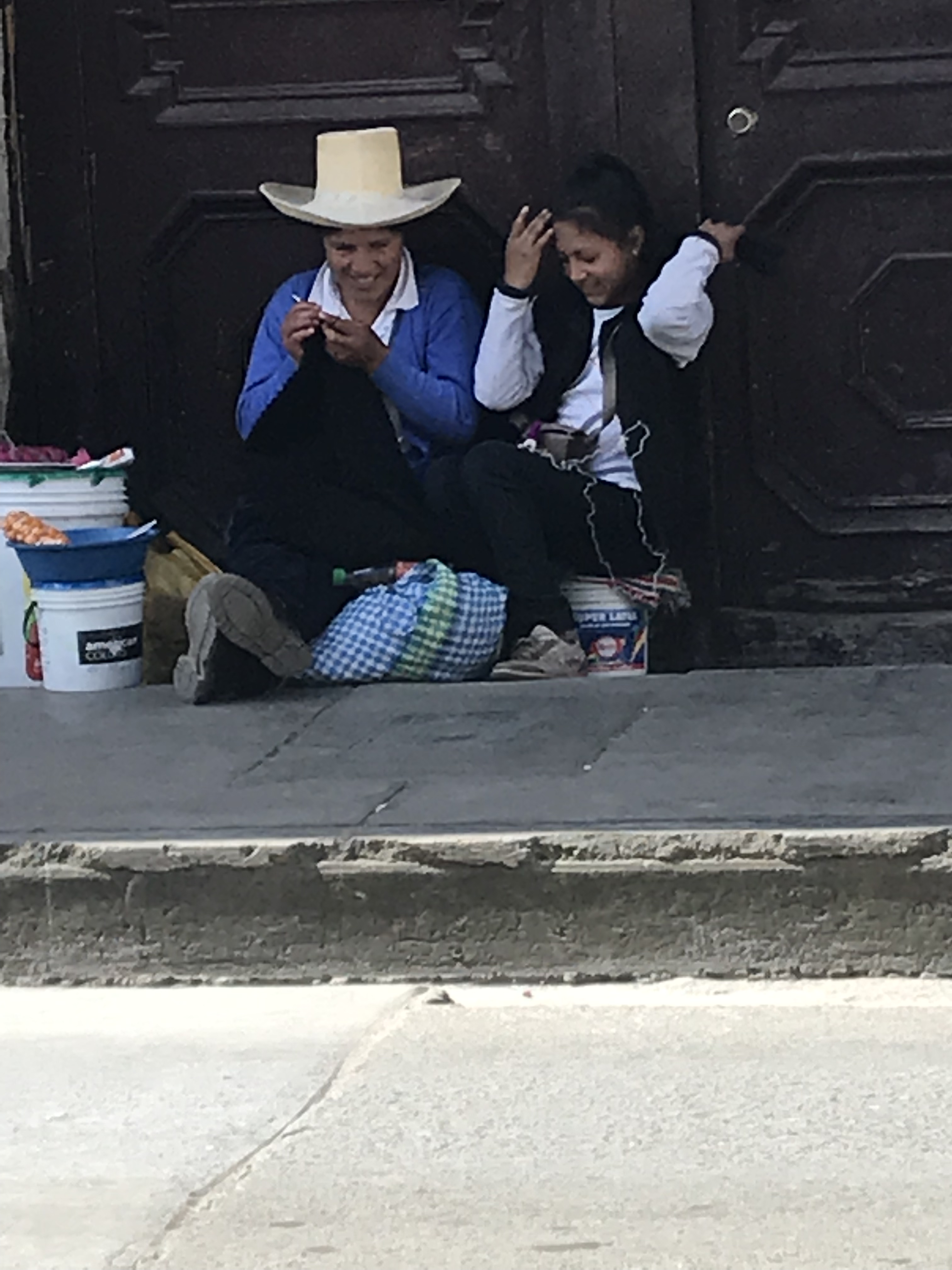
Cajamarca is as charming of a city as you could wish for. Narrow streets, colonial churches, and women in petticoats and odd 10-gallon hats. The last Incan Emperor, Atawallpa, was captured by Pizarro and held hostage here. Atawallpa offered to fill 3 rooms with gold and silver in exchange for his freedom and ordered Cusco stripped of precious metals. Unfortunately, Pizarro took the gold and killed him anyway.
It’s all fun and games until someone flies off the springy horse
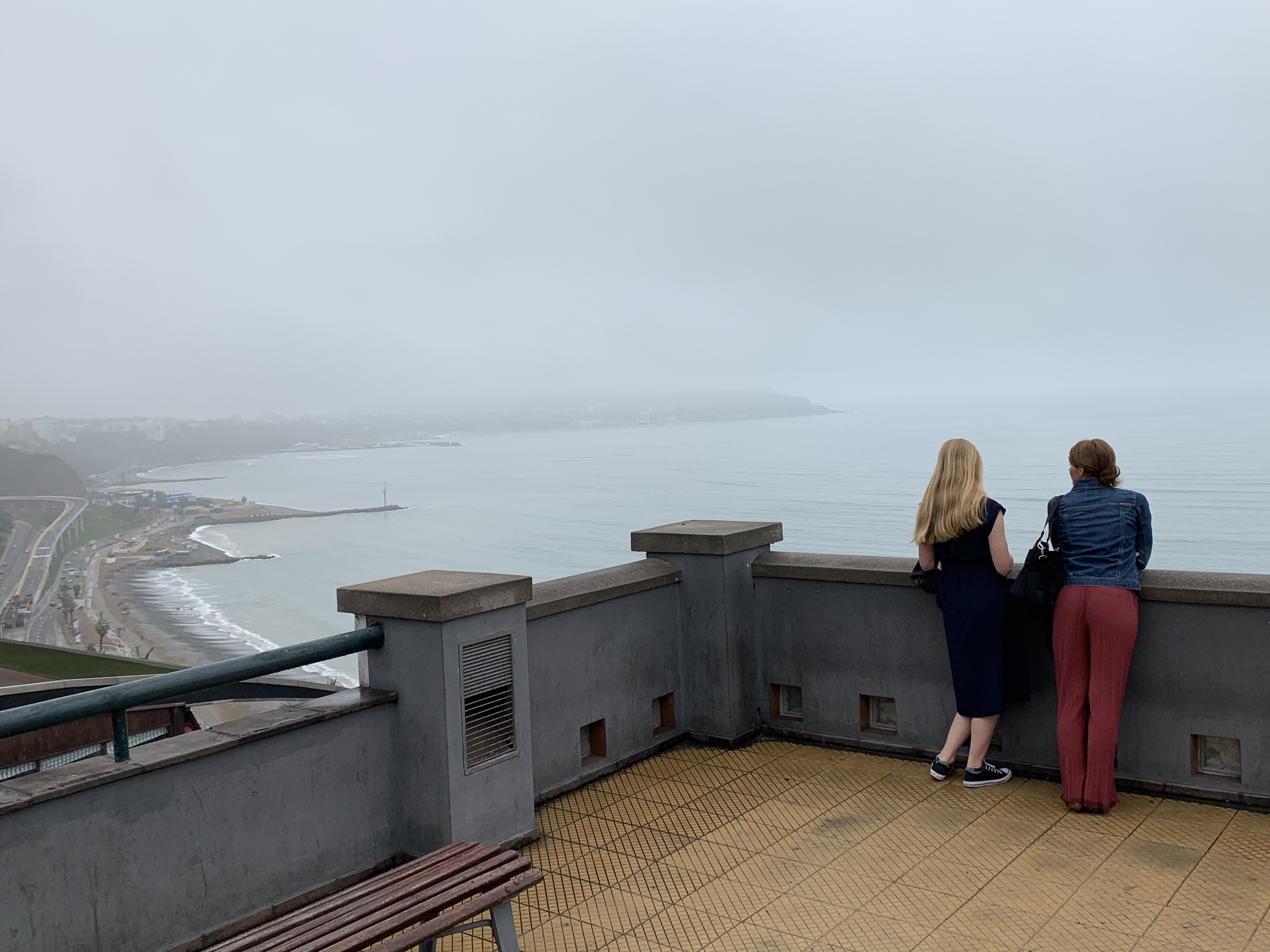
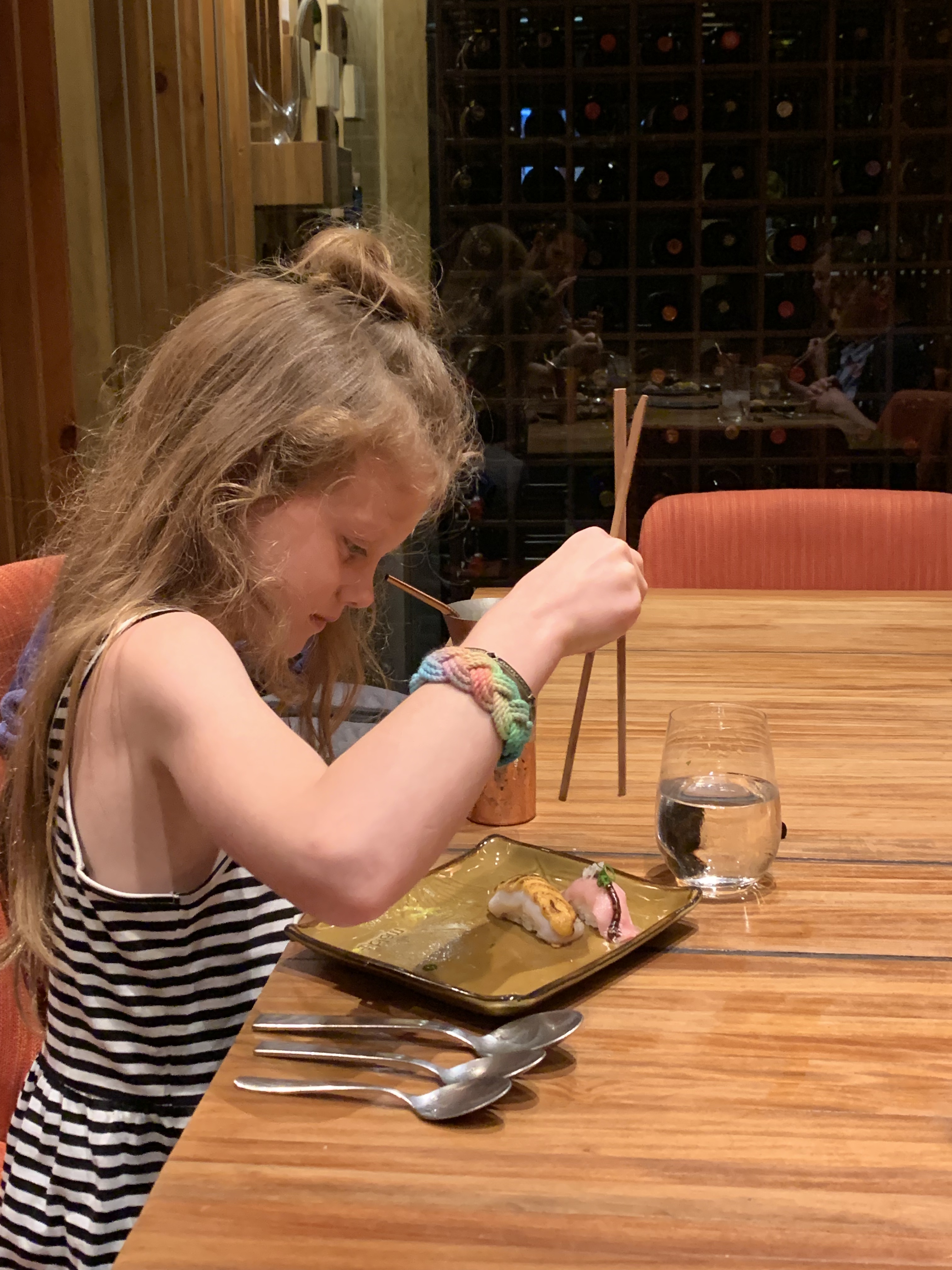
About a month ago, in a moment of unsurpassed confidence in my kids, I made a reservation at Maido in Lima – one of the top restaurants in the world. Peru is a great place to introduce caviar and foie gras, sea urchin cream and octopus, right?
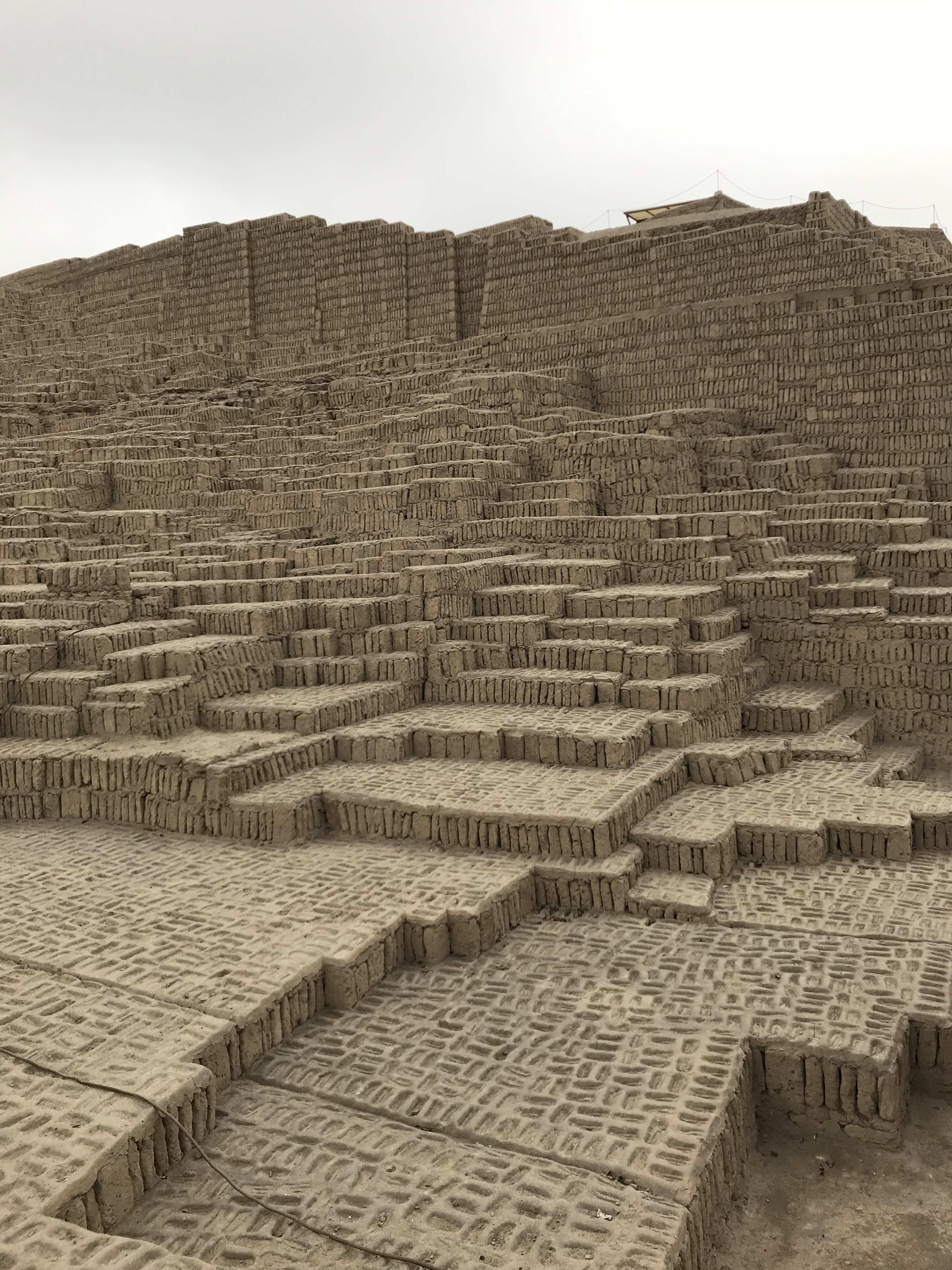
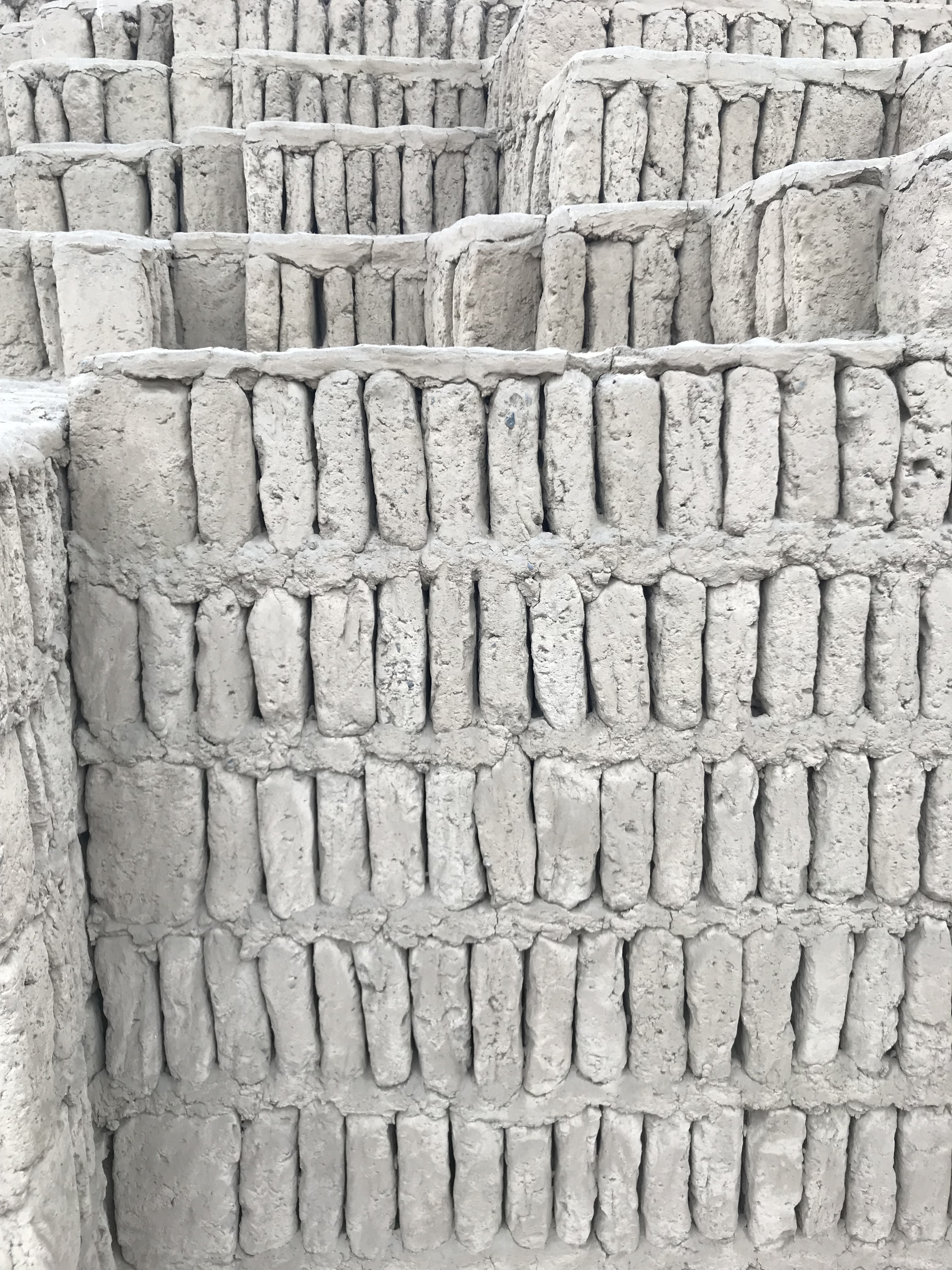
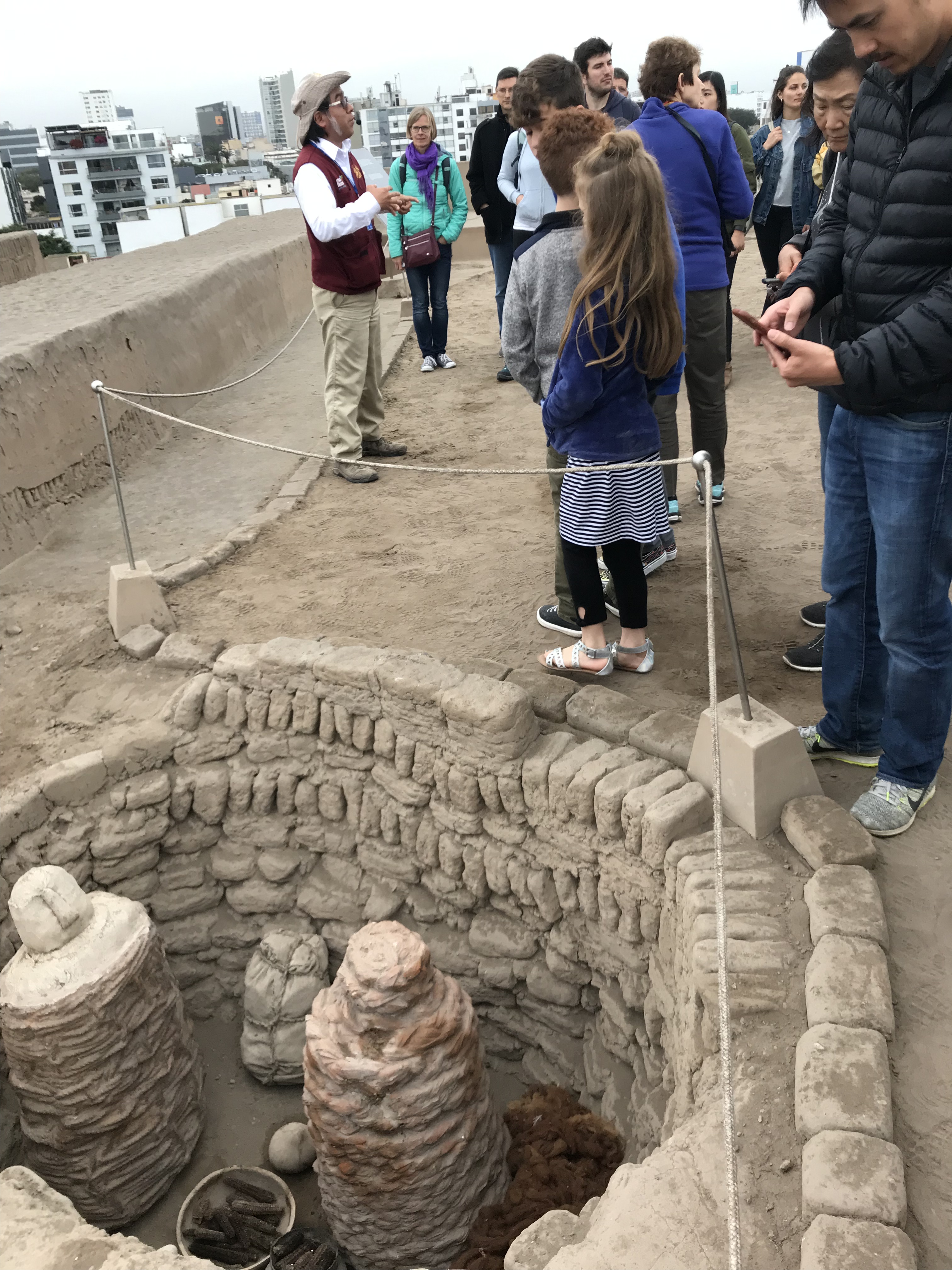
The most fascinating part of the Huaca Pucllana ruins wasn’t the millions of hand formed, sun baked bricks that survived 1500 years
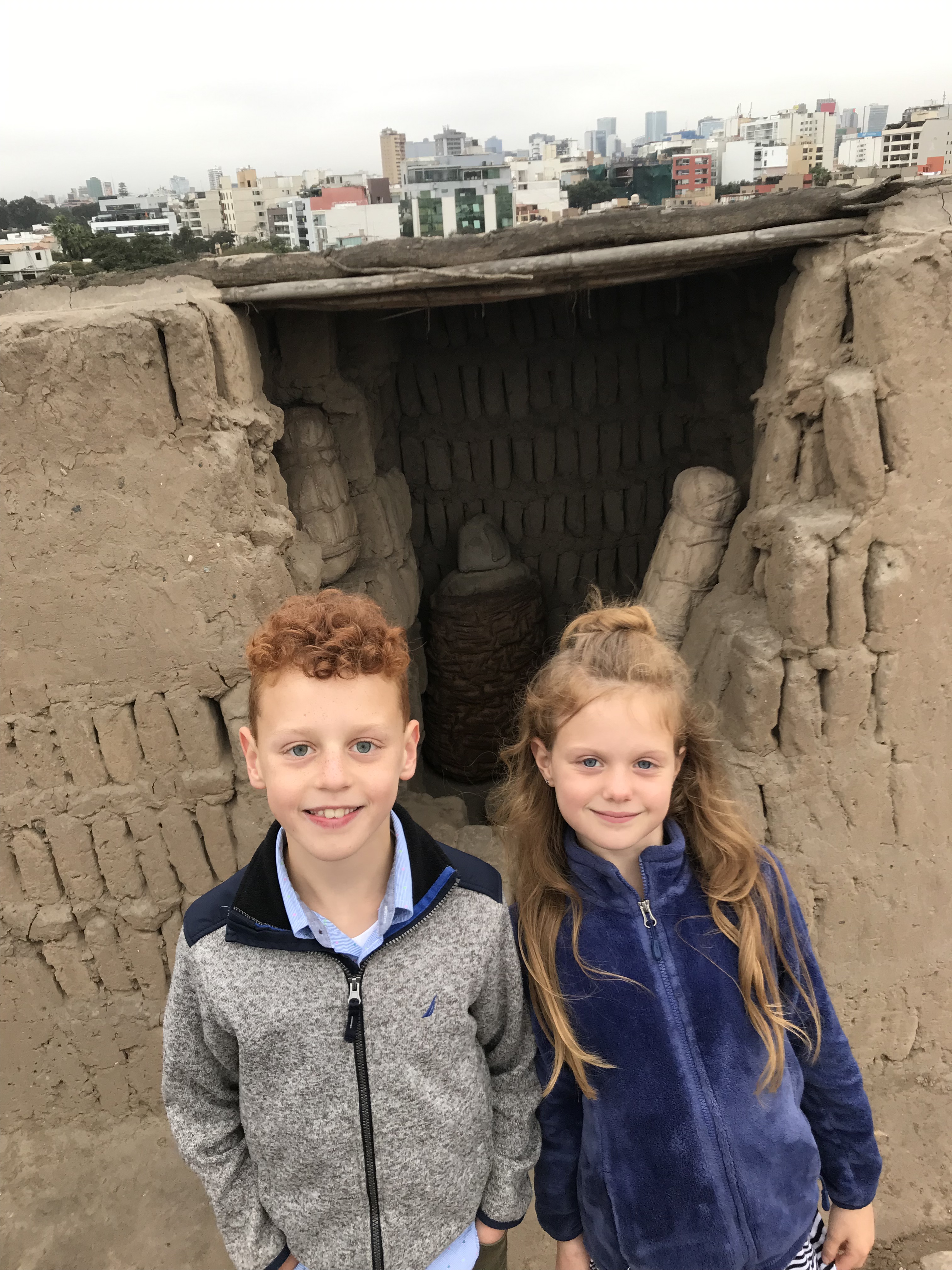
or the yellow paste still visible that help us picture these pyramids golden and shining, or the tombs with mummies folded in a fetal position and wrapped in dried leaves…
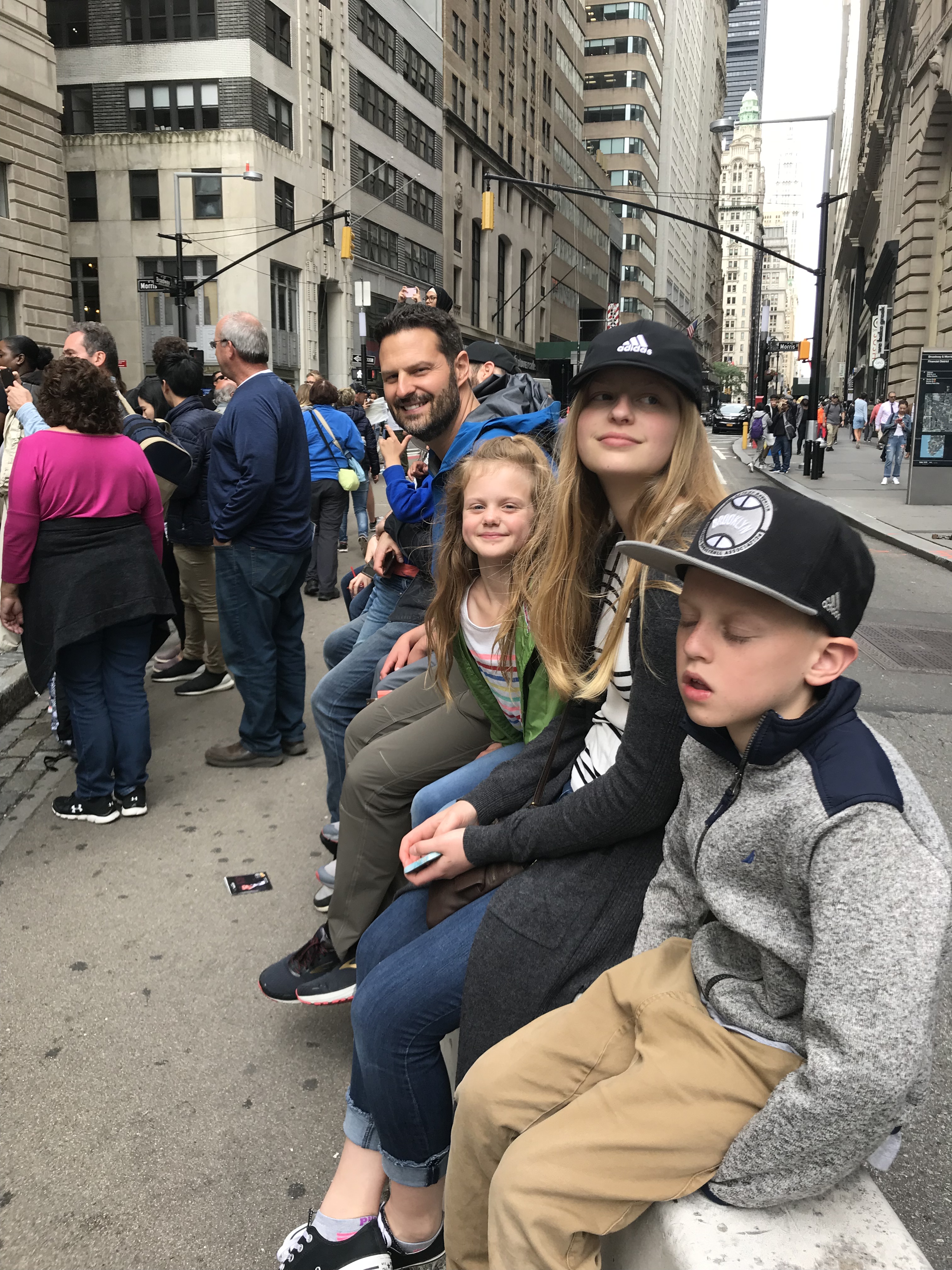
Best transportation: Subways due to the glee of the children discovering rats and Aaron rubbing the shoulders of an innocent subway rider he mistook for one of his kids
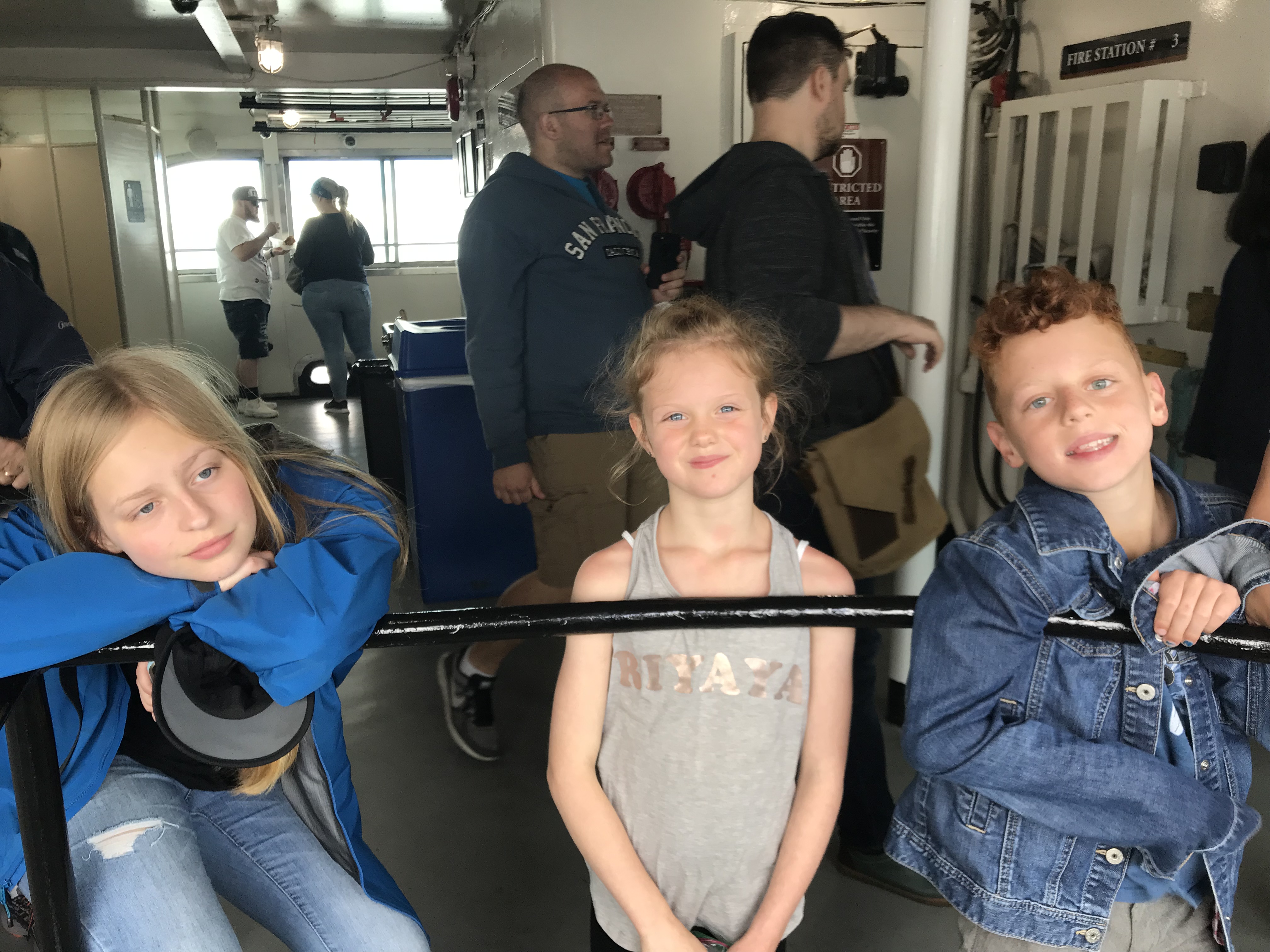
Worst transportation: Ferries since the lines were over 2 hours:(
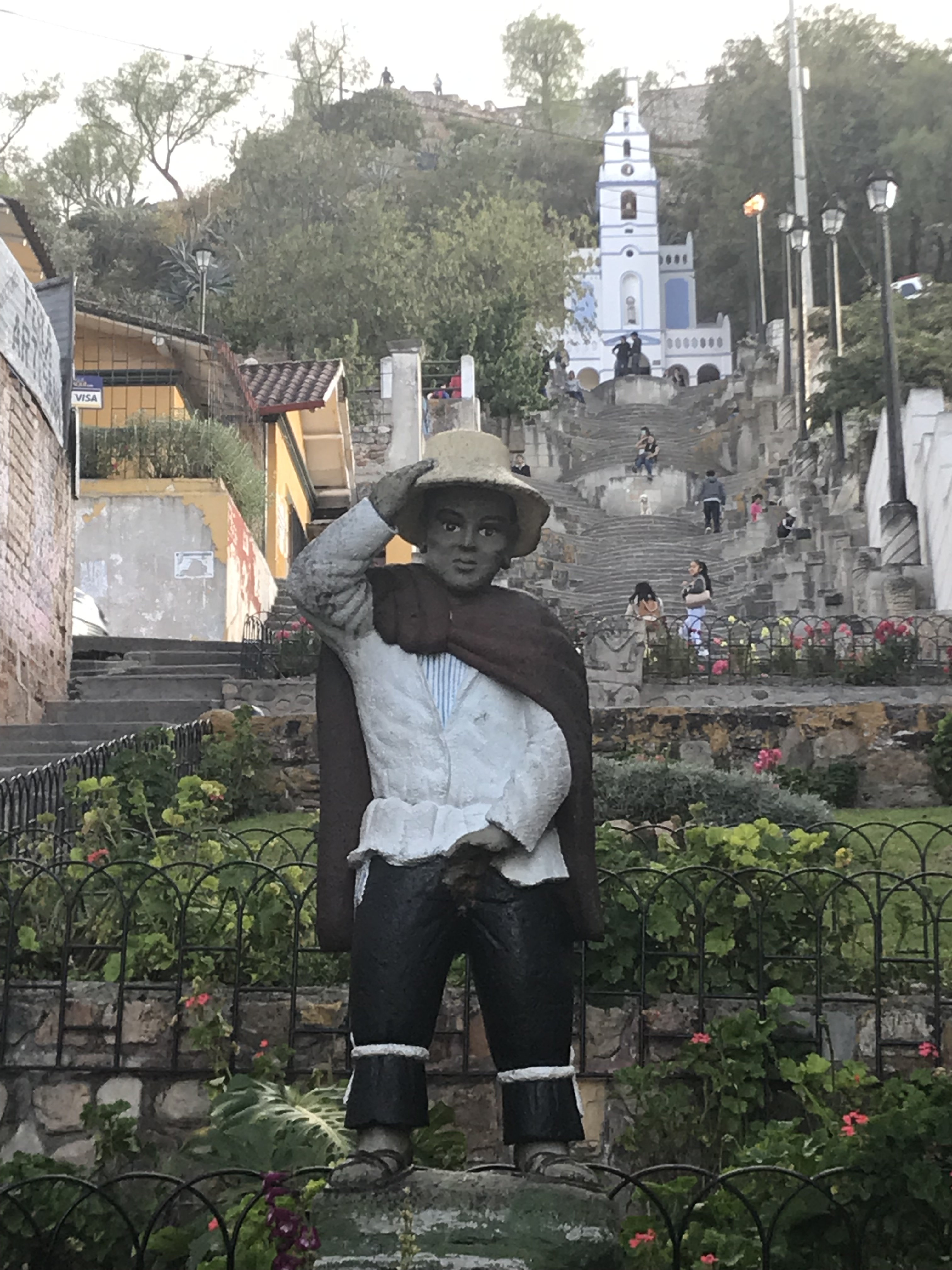
Worst activity (per Erin and Aaron): Frequent conversations about how to be respectful to sculptures
Best Activity (per the children): A fish carousel of spinning musical kitsch and putting our fingers in the noses of sculptures.
Best food: street lychees driving they china town and Bryan’s Best Biscuits
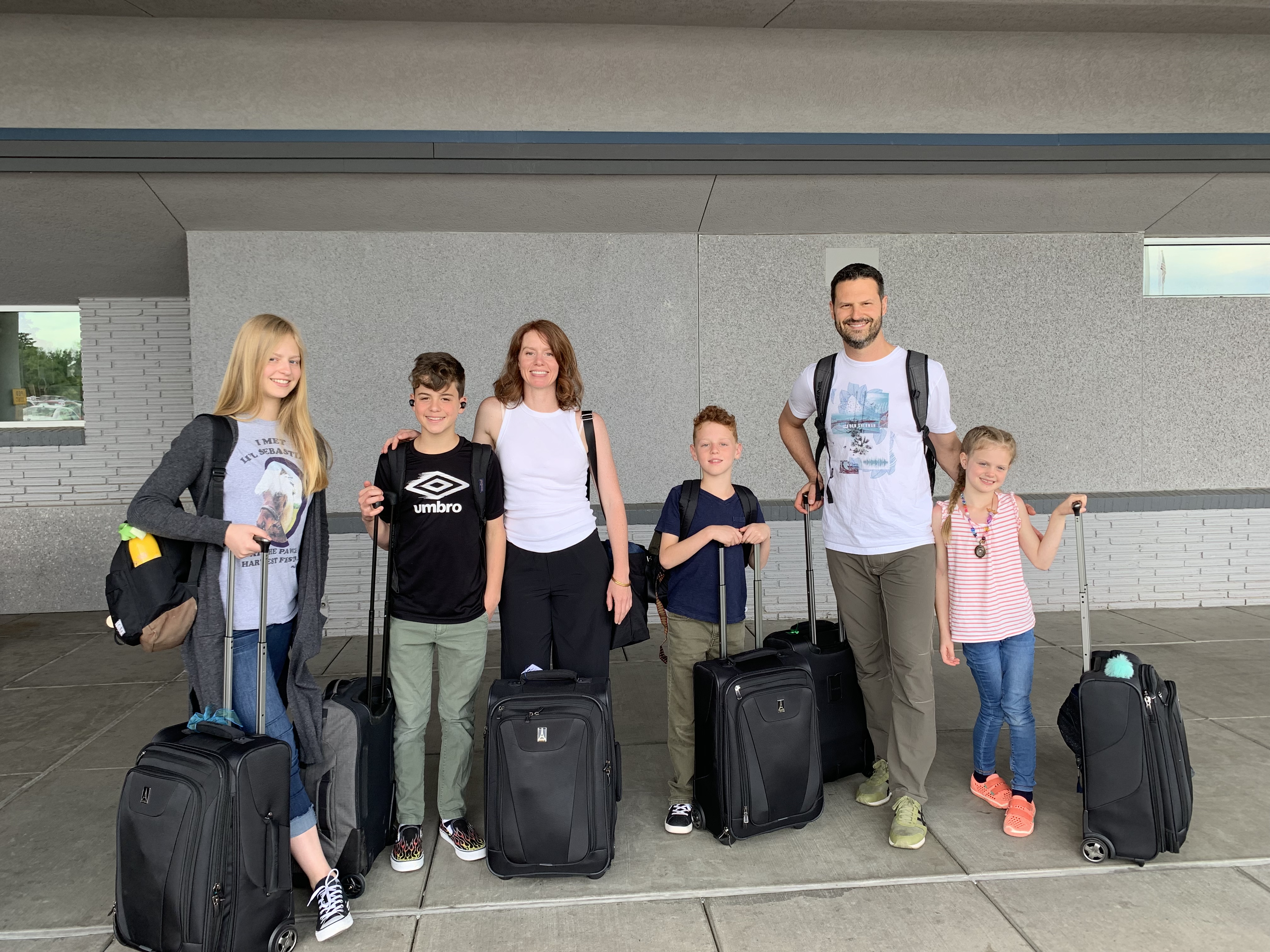
I looked at my calendar and google maps said traffic was light in Yakima and we made it in less than 5 minutes… thanks Alena Hanson for the ride!
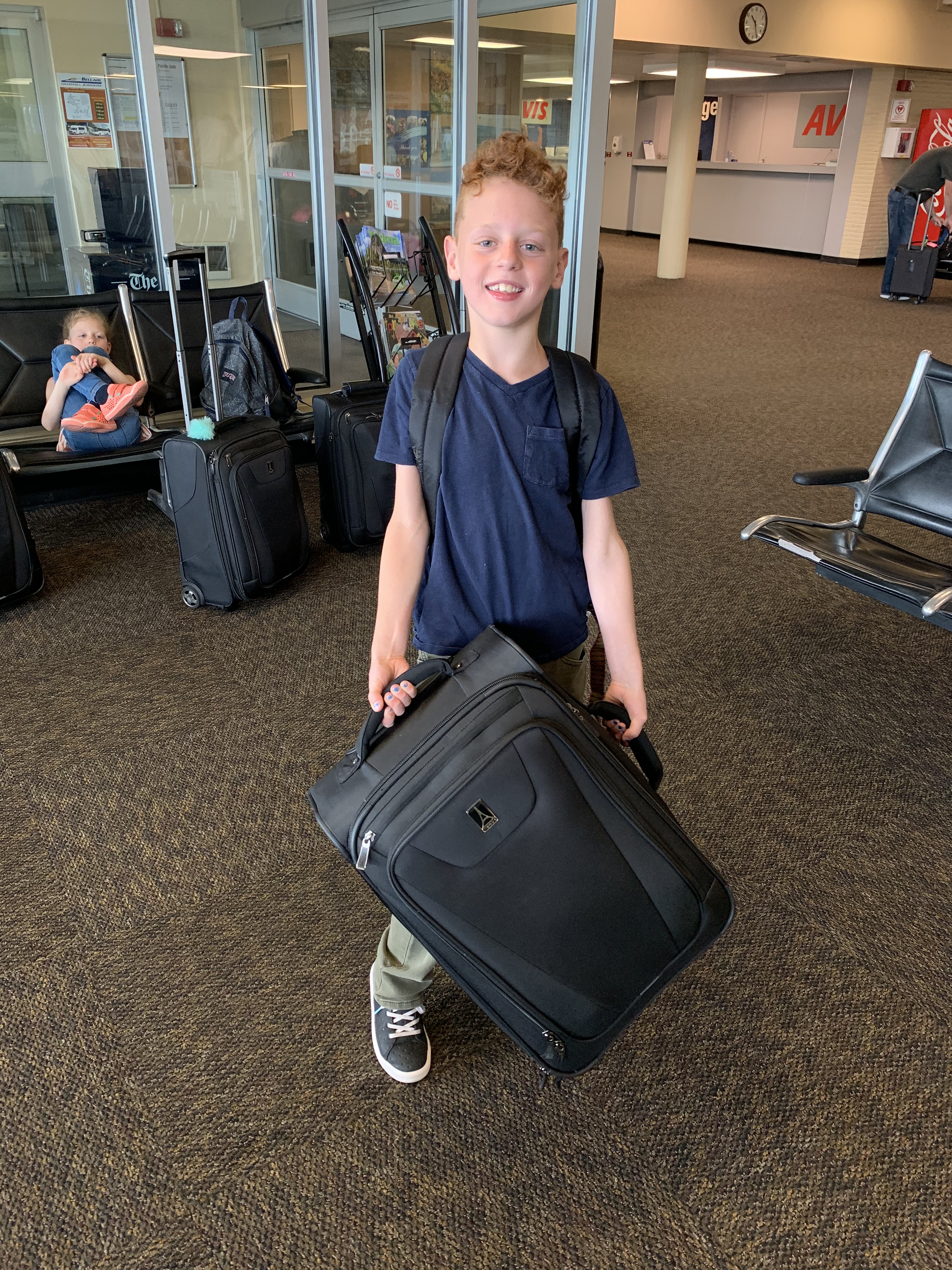
So far taking the liquids and devices out of 6 bags and getting them all back in their respective bags has been the biggest challenge.
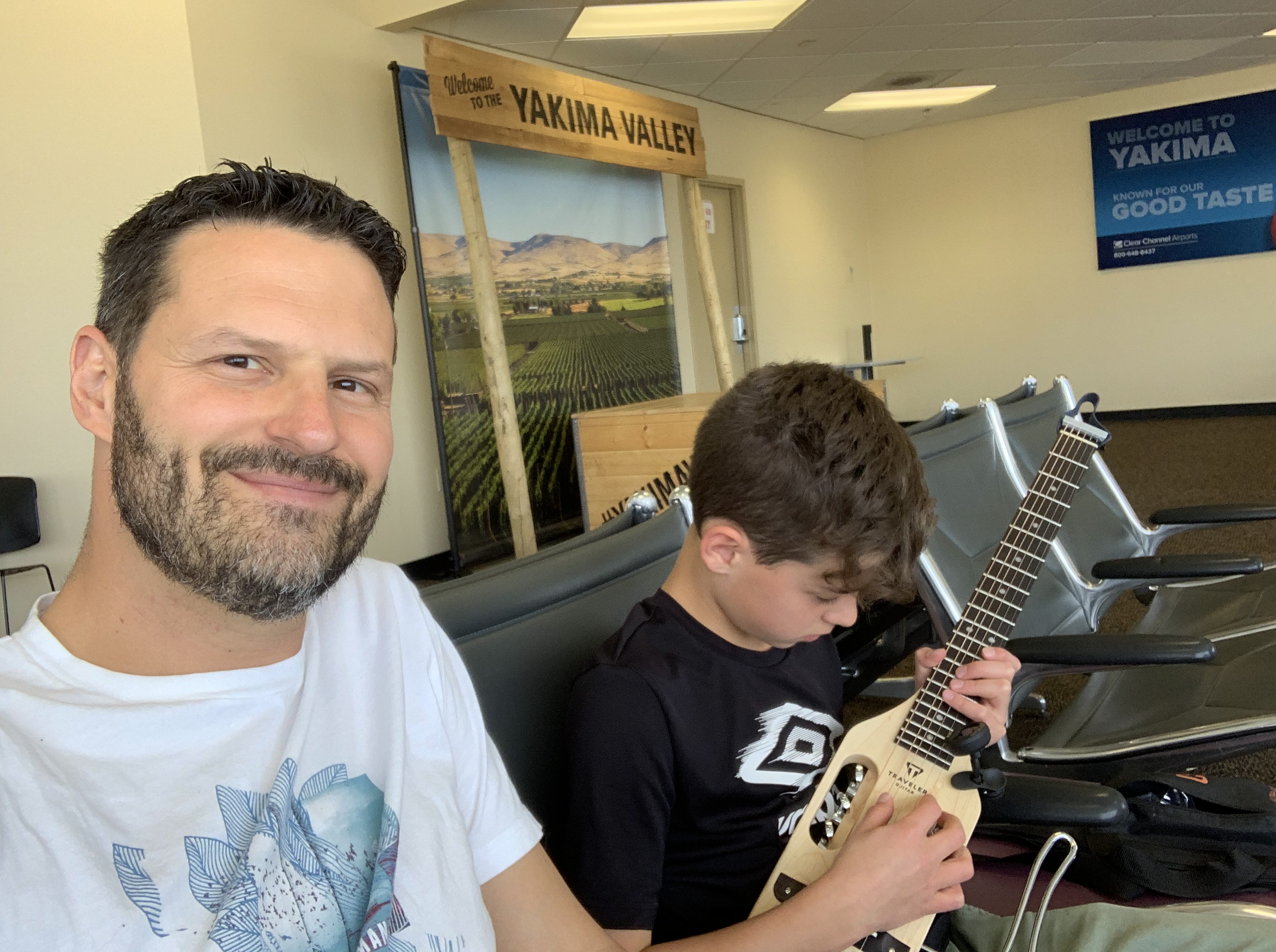
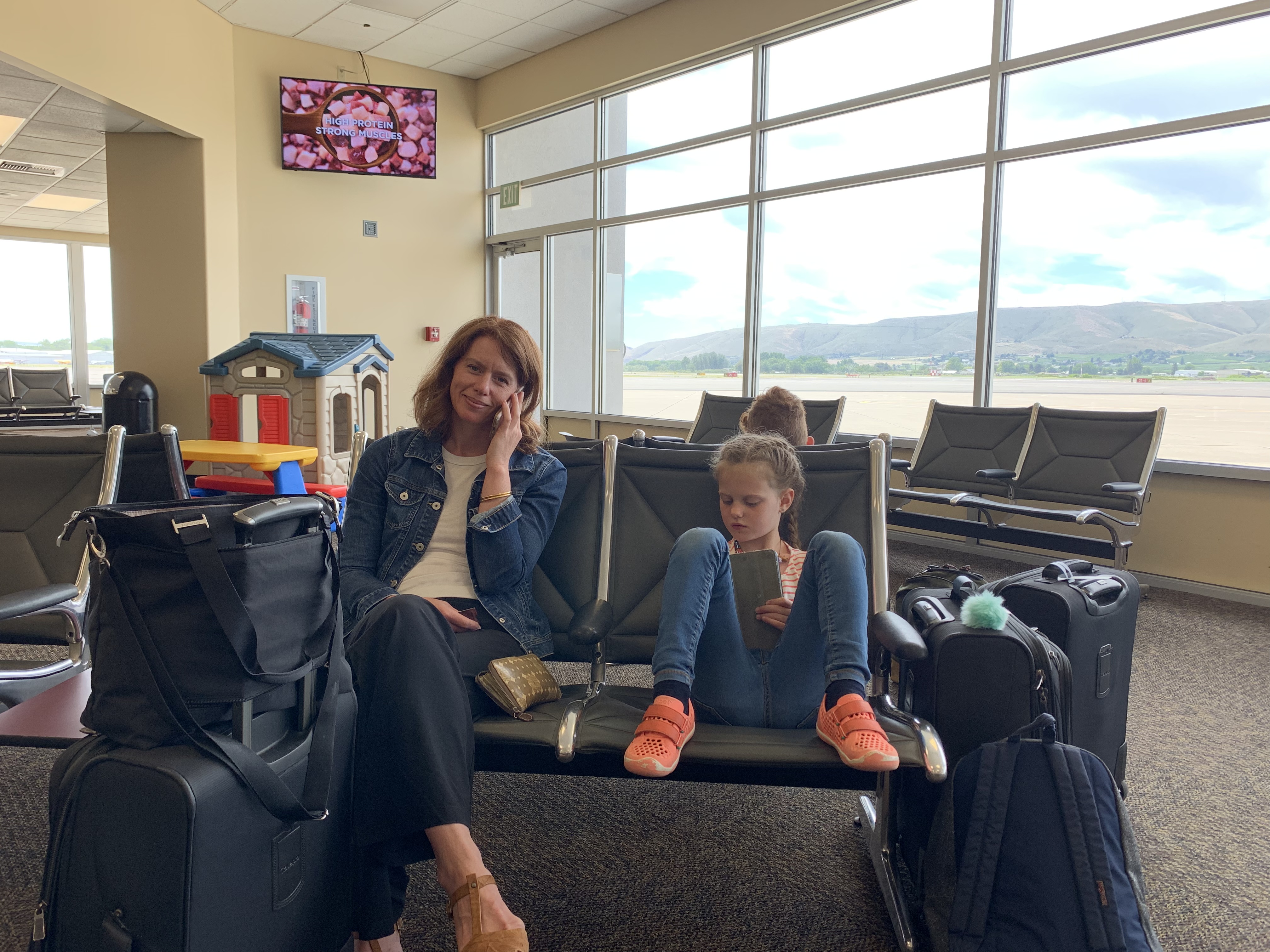
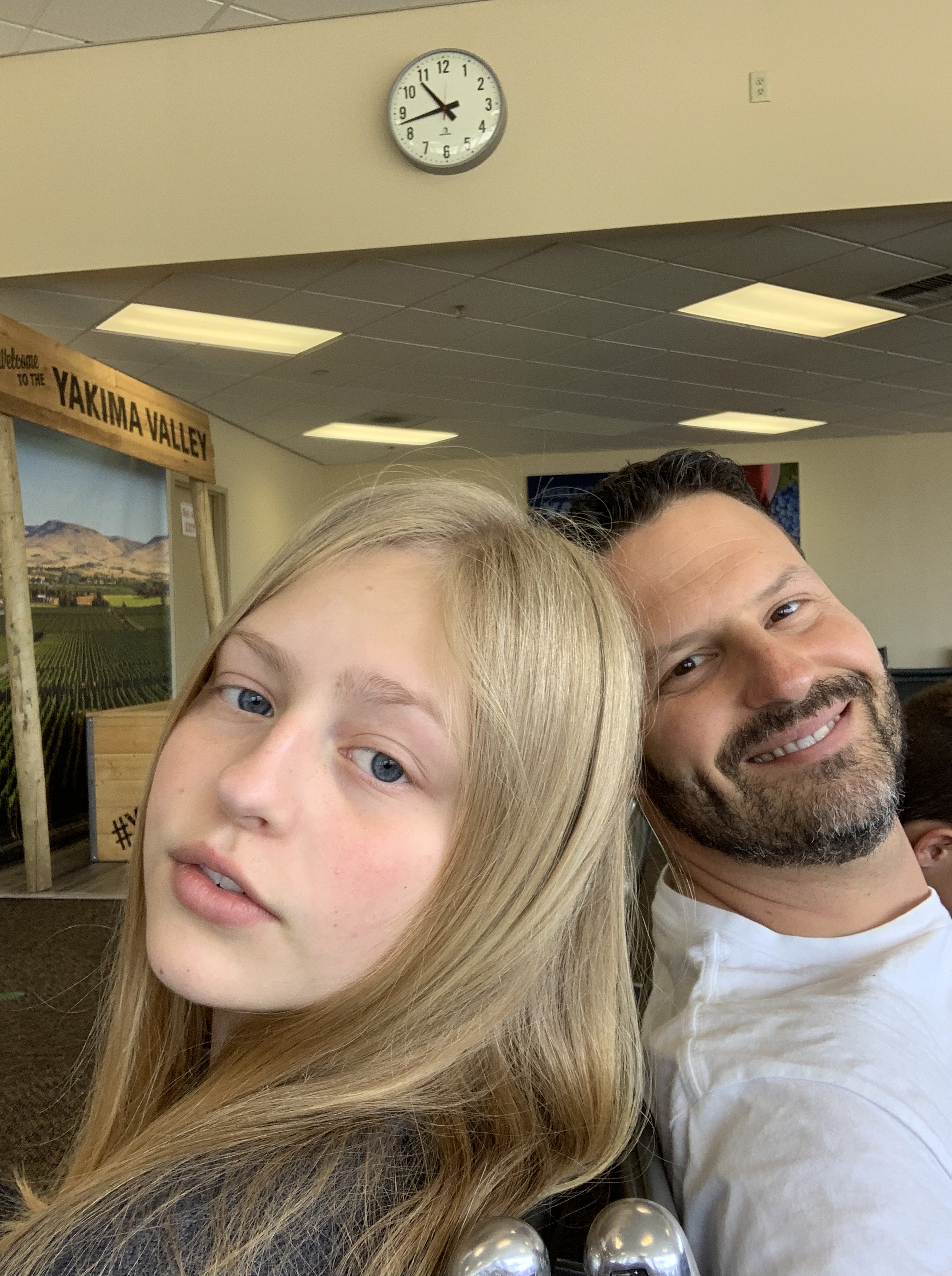
We’ve lived in Yakima 10 years and this is the first time we’ve flown out of here. The word “quaint” comes to mind in describing Yakima International Airport or YIA.

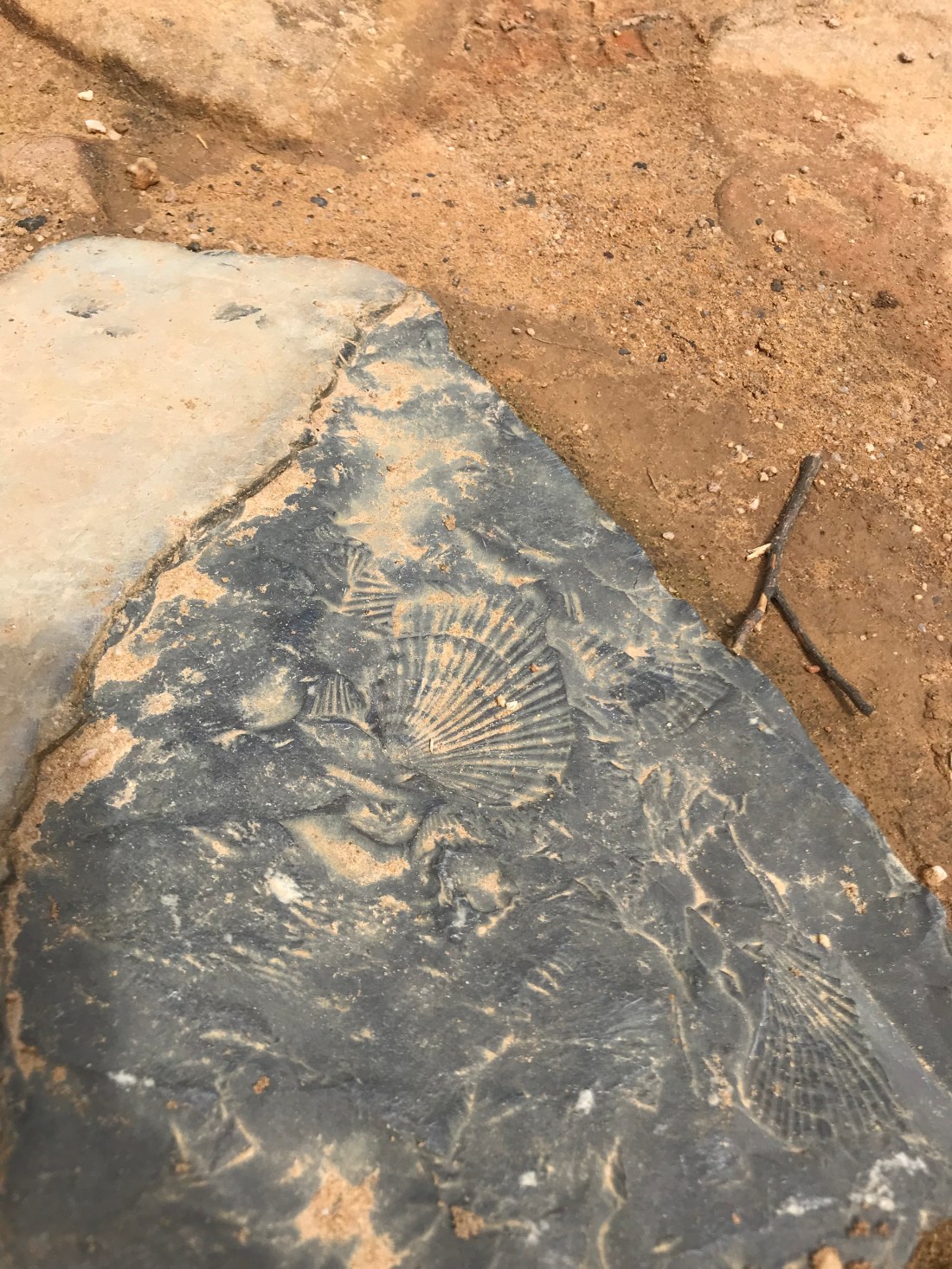
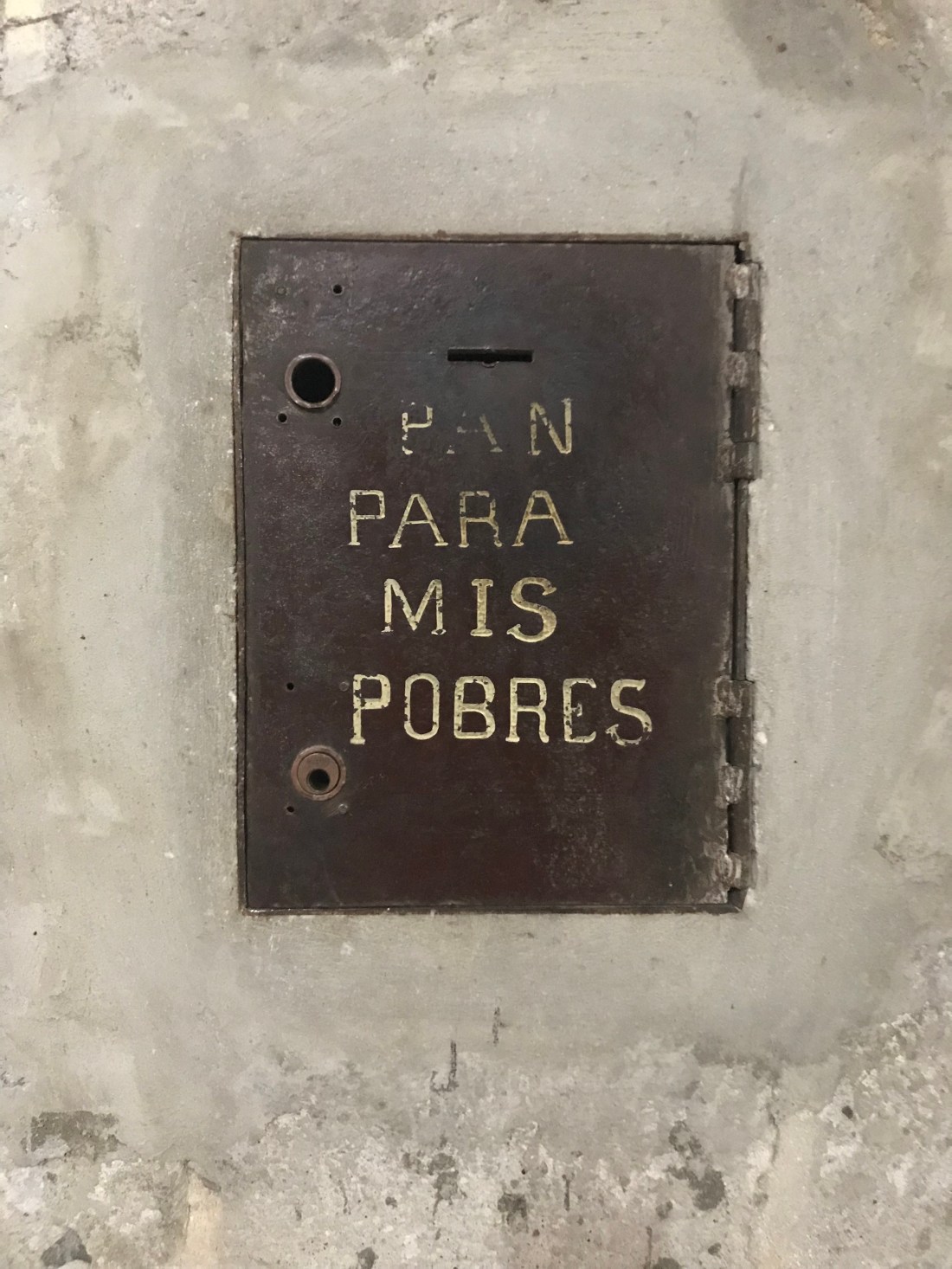
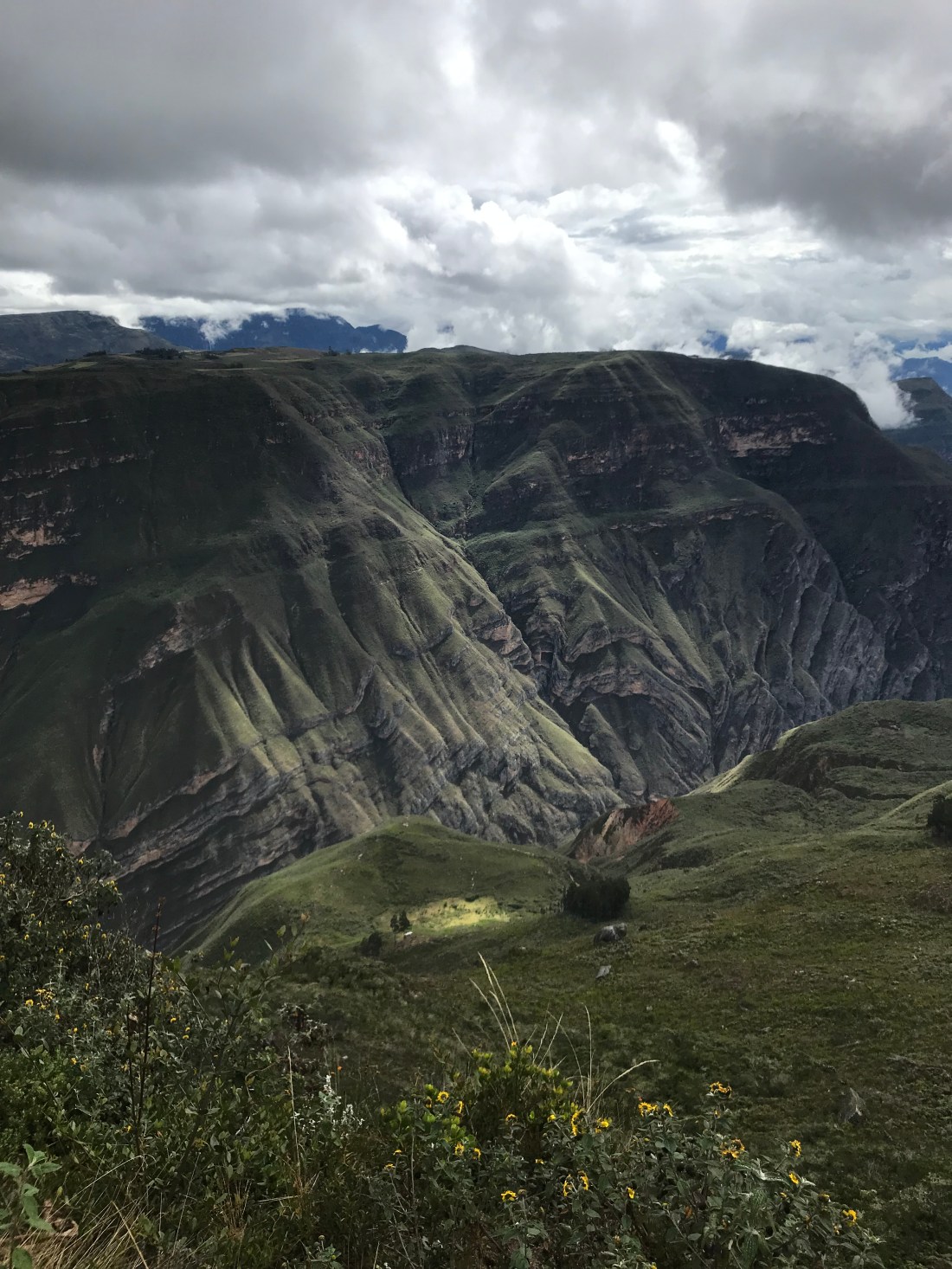
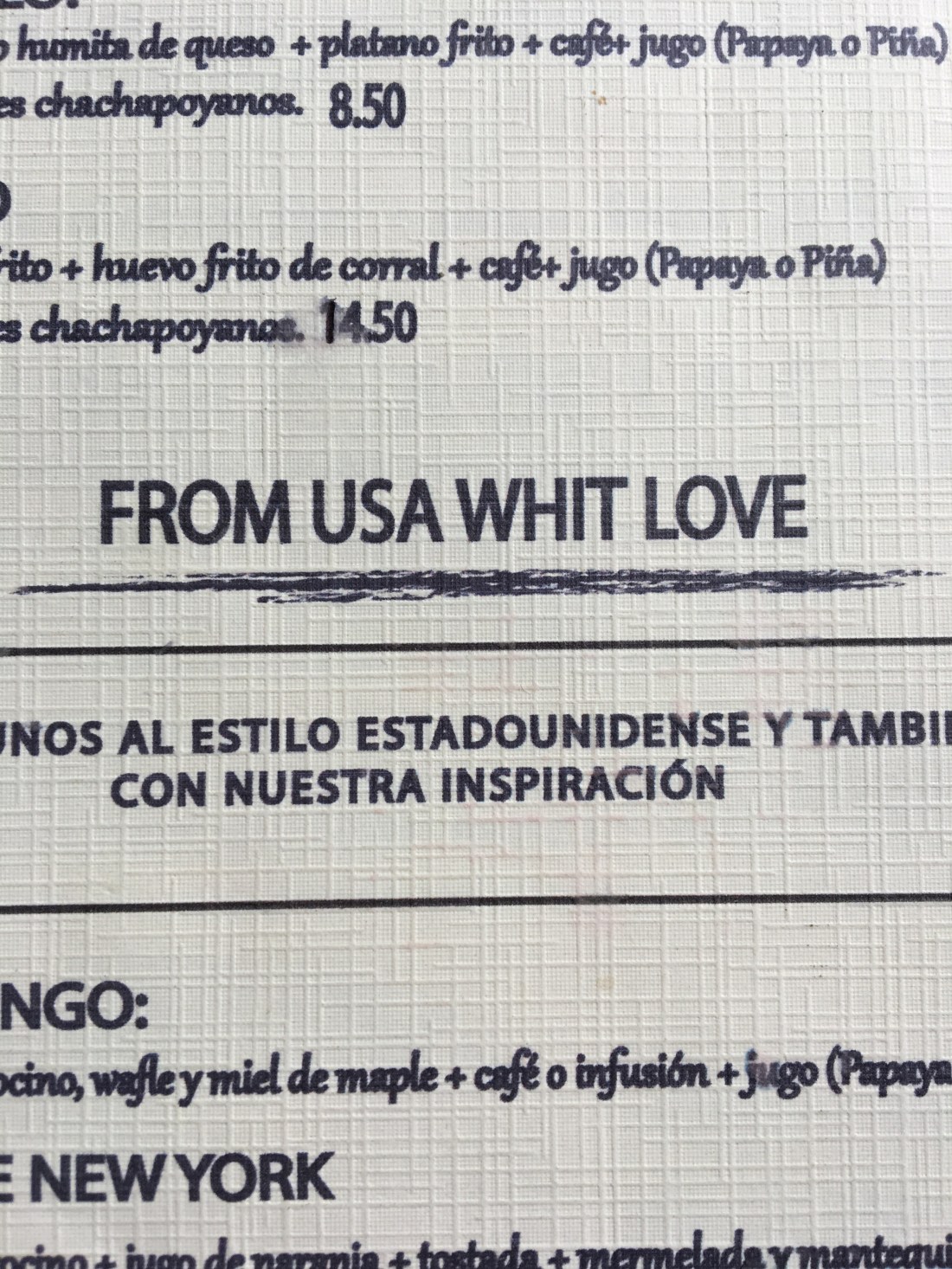 The Andes. The closest thing to mountain top experience without actually climbing a mountain. I can’t stop taking pictures.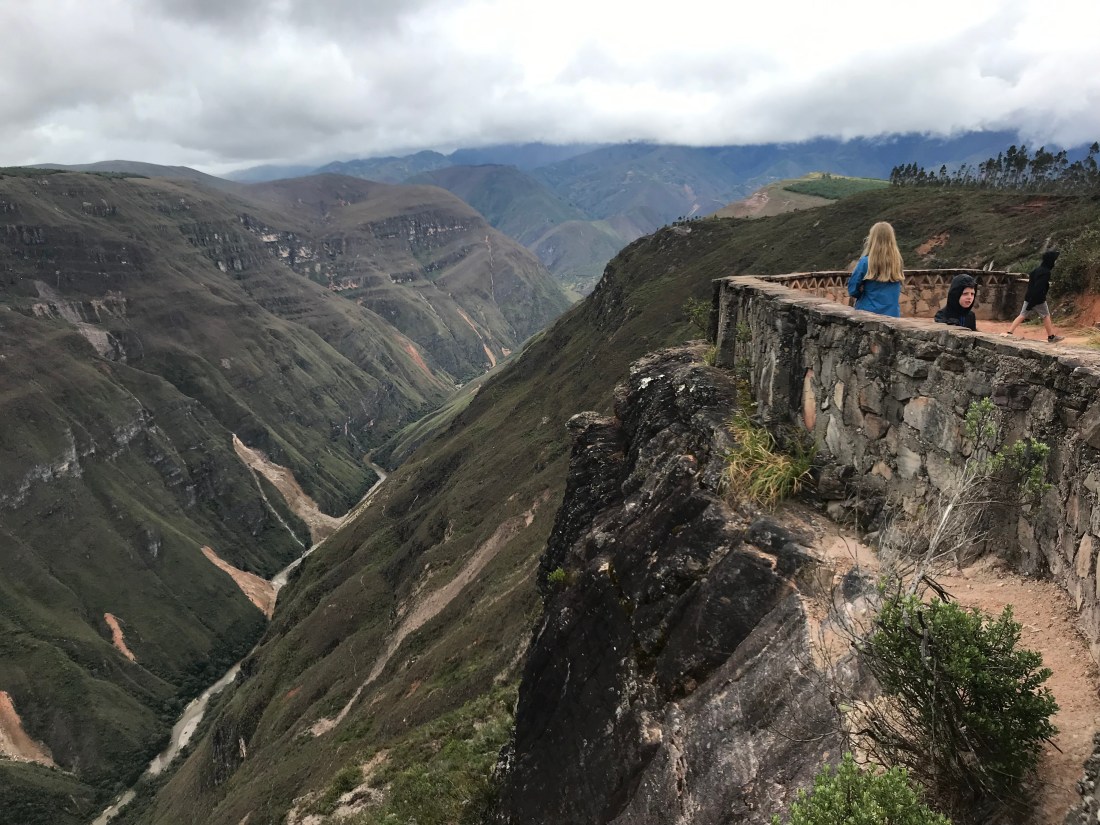
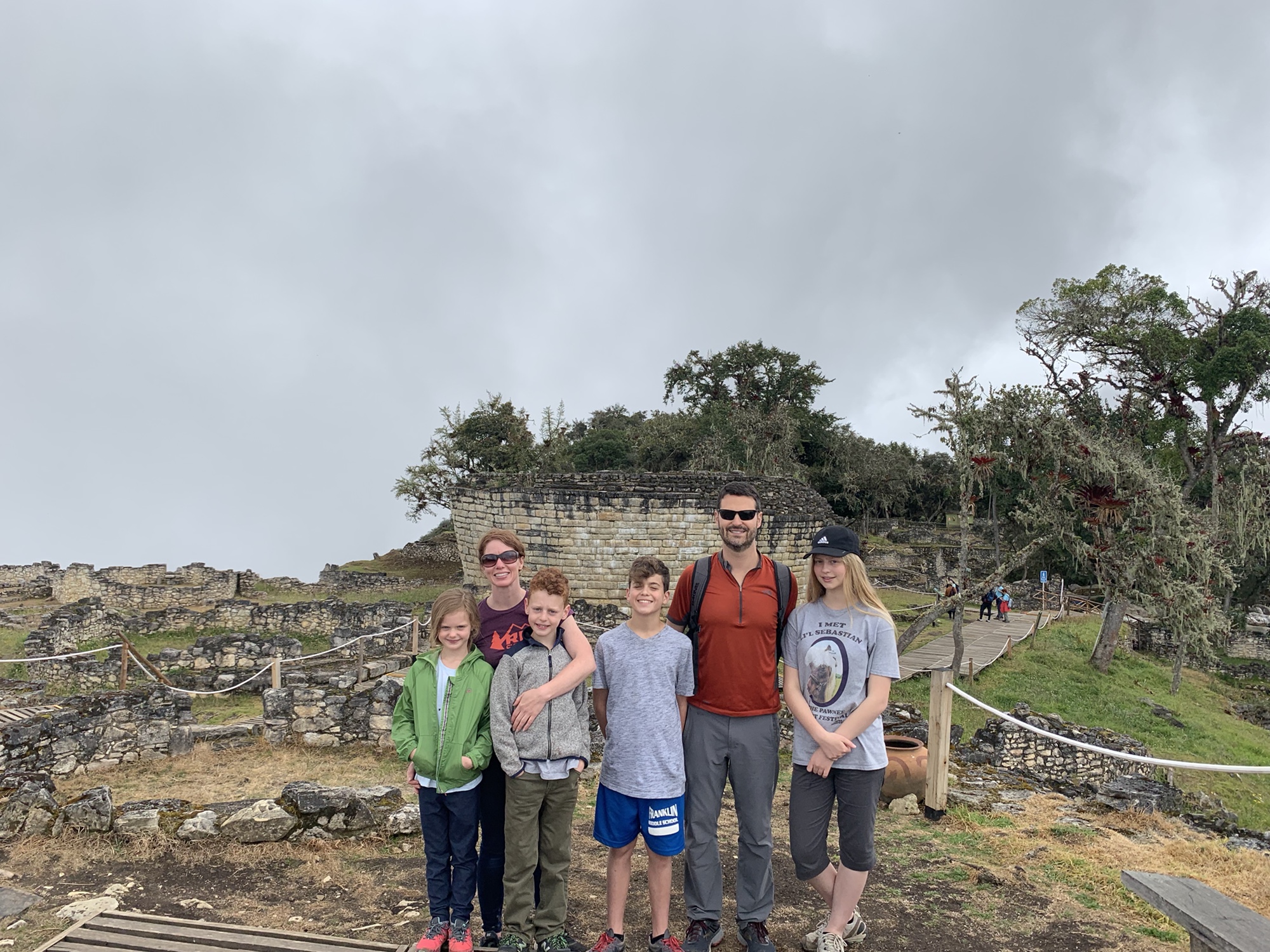
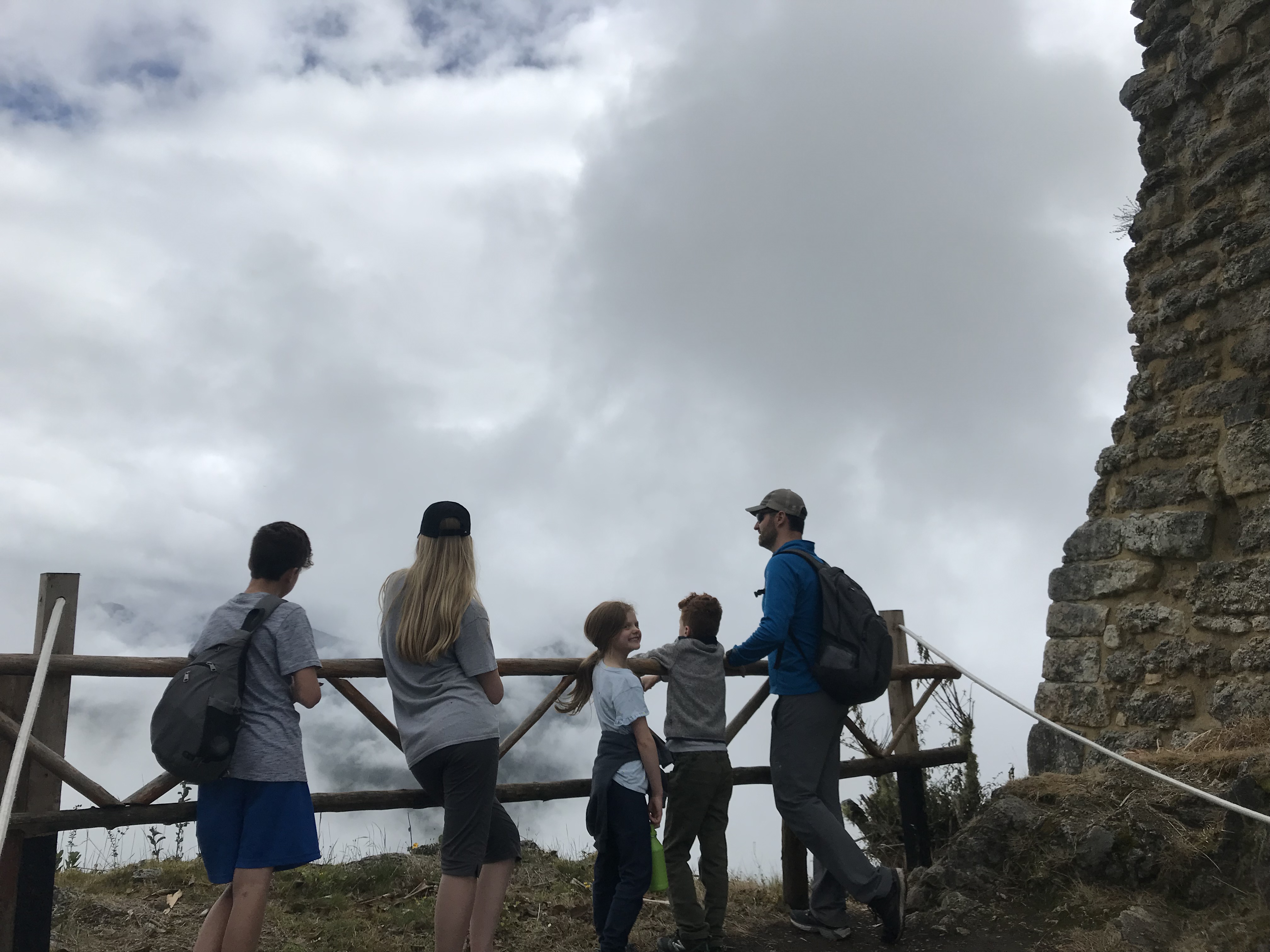 No, this isn’t a chapter you missed in Lord of the Rings. The Chachapoya culture that inhabited Keulap are often referred to as the Cloud Warriors. The name is well earned as their settlement was discovered in 1843 at almost 10,000 ft on top of a mountain in the north of Peru. And what a fantastic spot to build a city…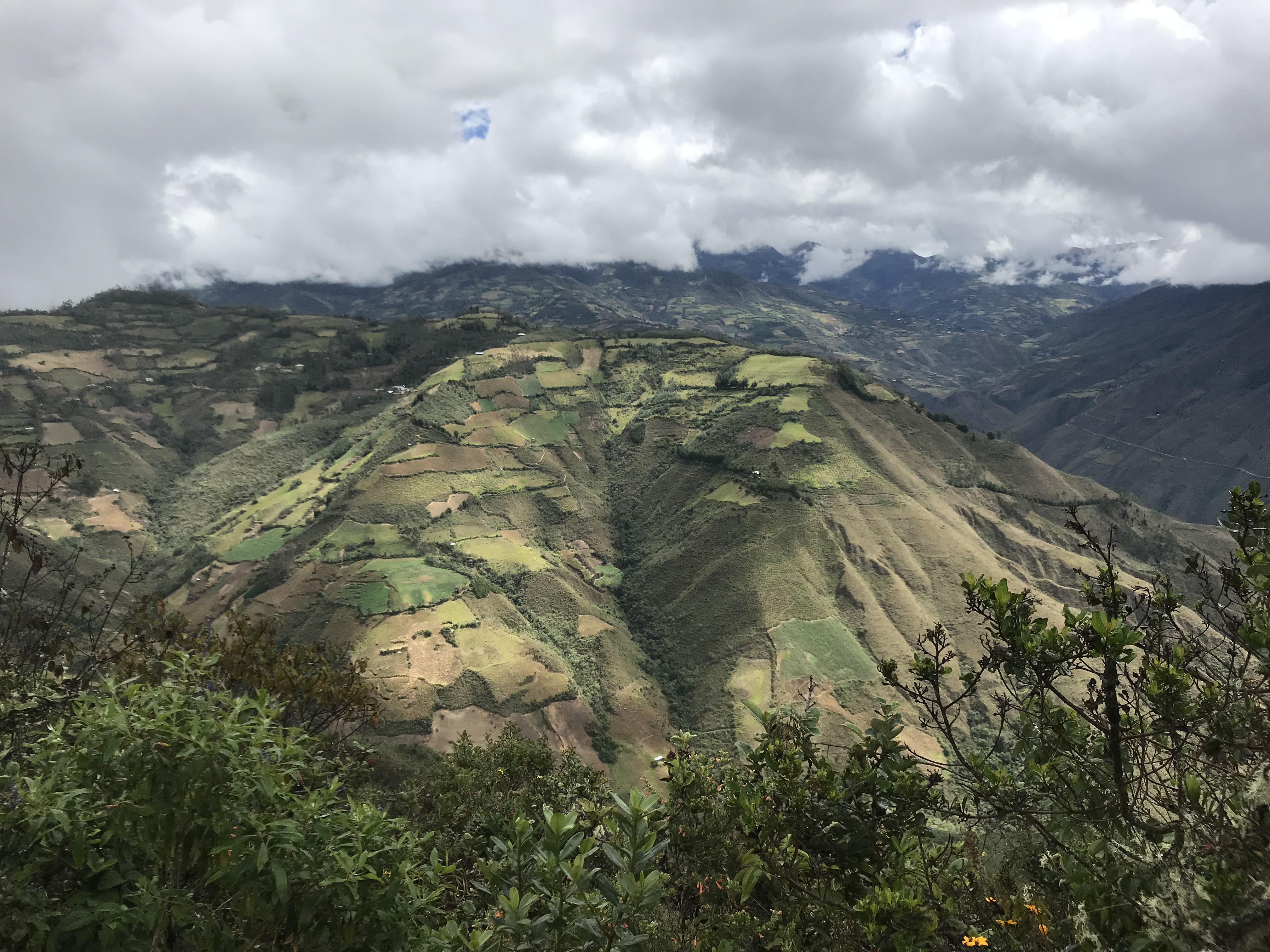
 Historians think that they might have lived with their dead (small structures inside each home were filled with human bones) and believed that their ancestors had rich afterlife and could impact or empower the living.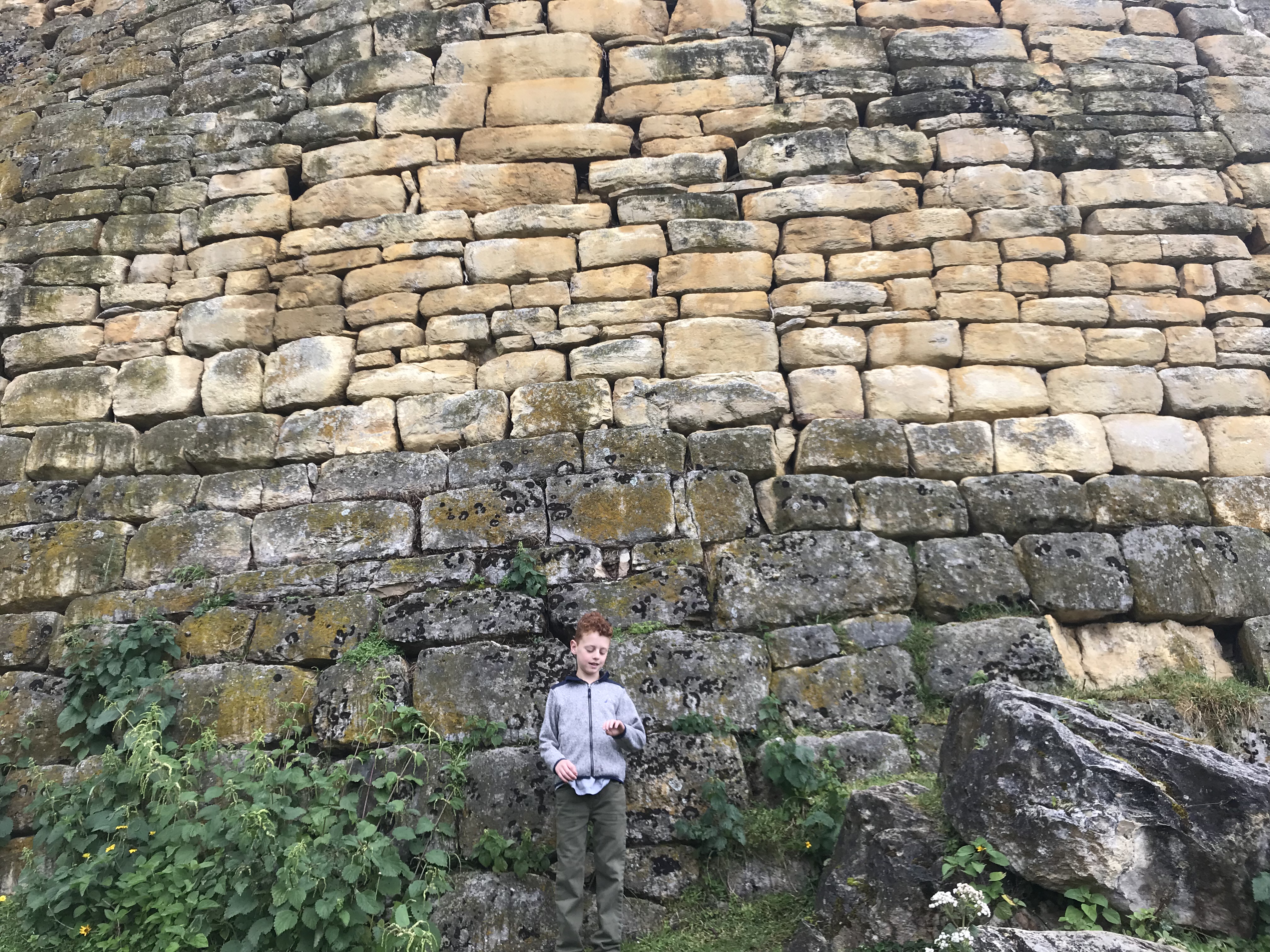
 I loved the Ventanillas de Otuzco. Dating from 200-800 b.c. and the Cajamarca culture, these are considered a funerary complex. The dead were folded into a fetal position and placed in the niches in the volcanic stone.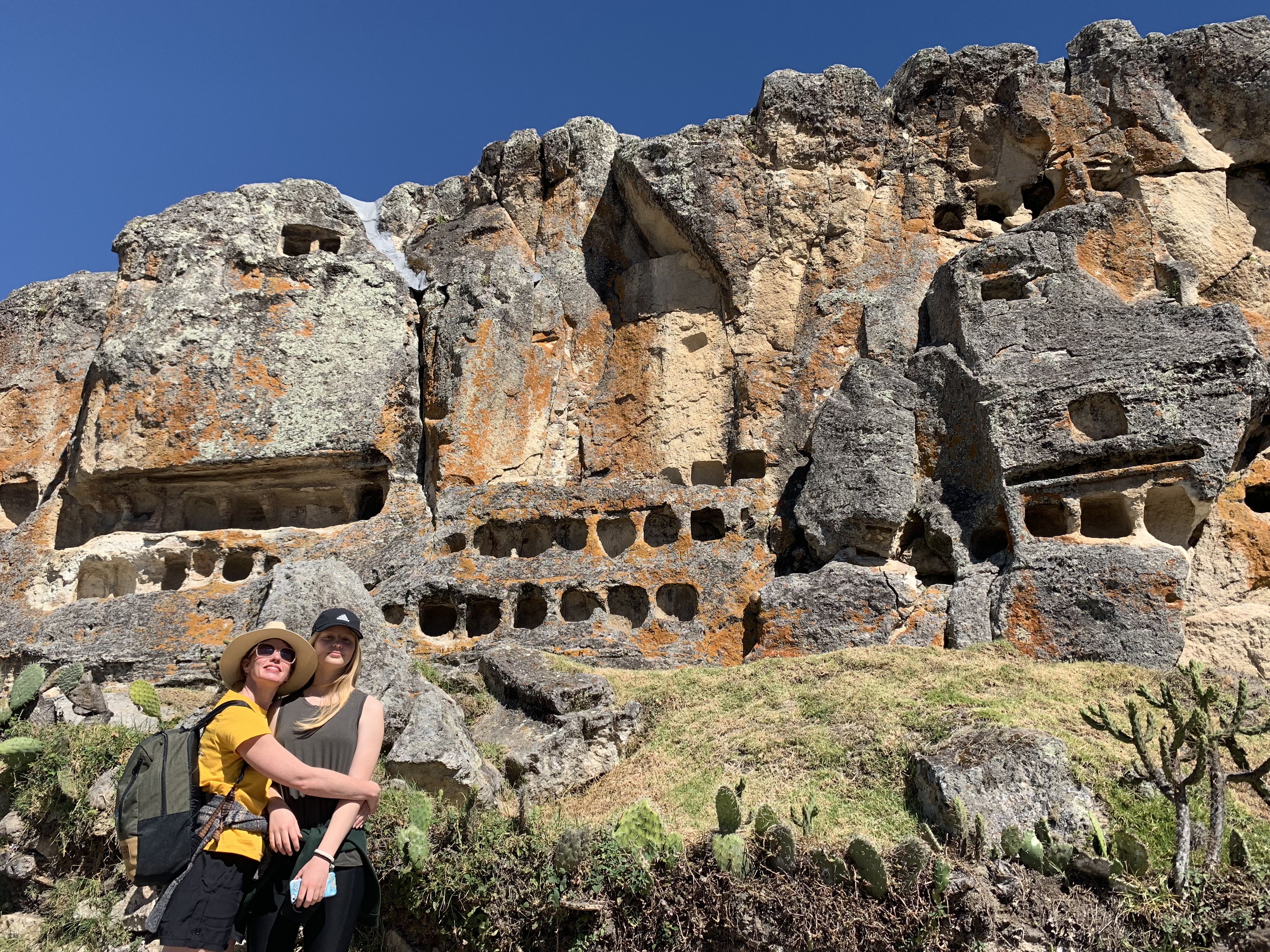
 For more protein in our diet, we opted for the menu del día today. The chicken soup was delicious, though none of us finished the meaty additions.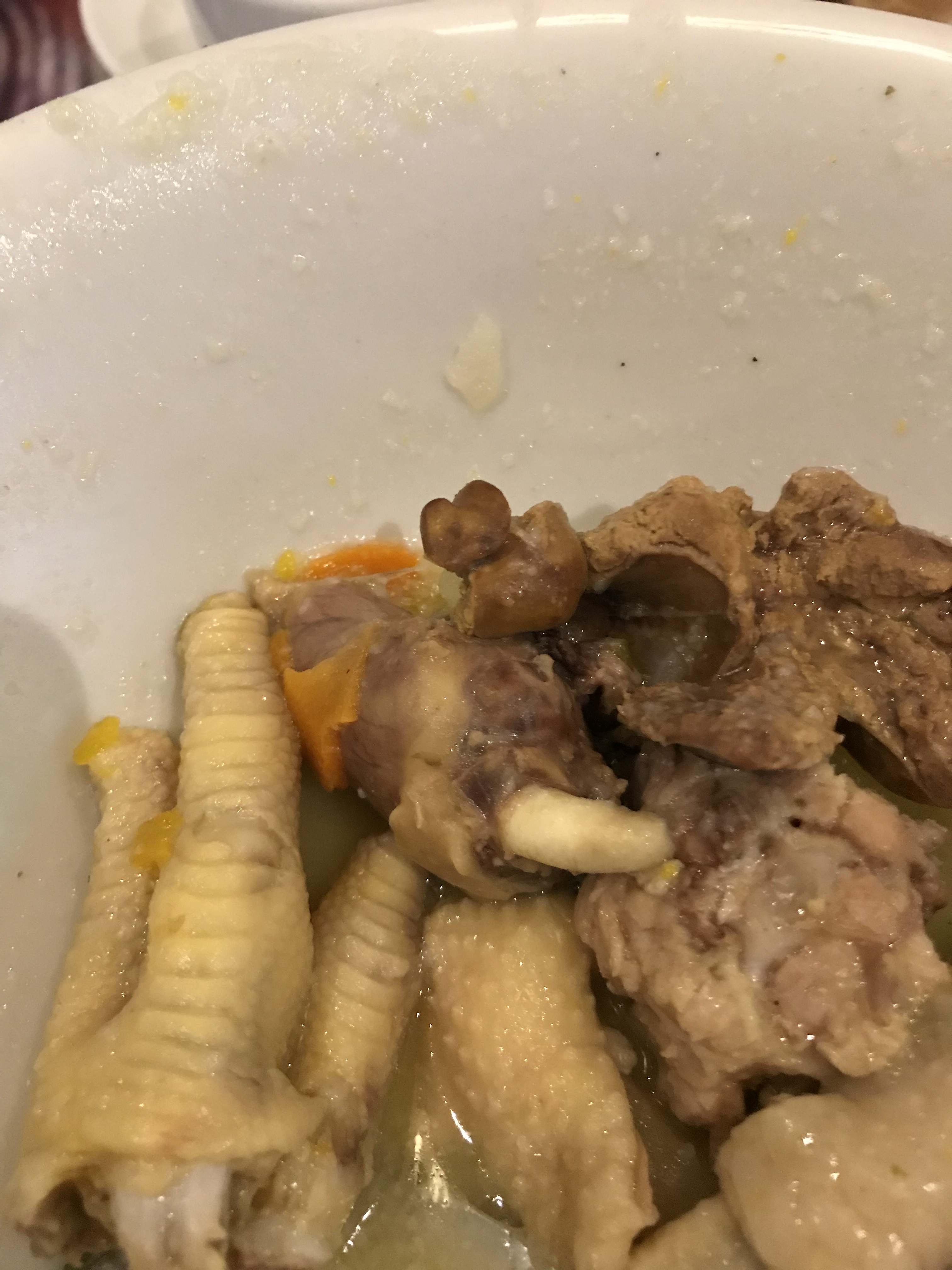
 Cajamarca is as charming of a city as you could wish for. Narrow streets, colonial churches, and women in petticoats and odd 10-gallon hats. The last Incan Emperor, Atawallpa, was captured by Pizarro and held hostage here. Atawallpa offered to fill 3 rooms with gold and silver in exchange for his freedom and ordered Cusco stripped of precious metals. Unfortunately, Pizarro took the gold and killed him anyway.
 It’s all fun and games until someone flies off the springy horse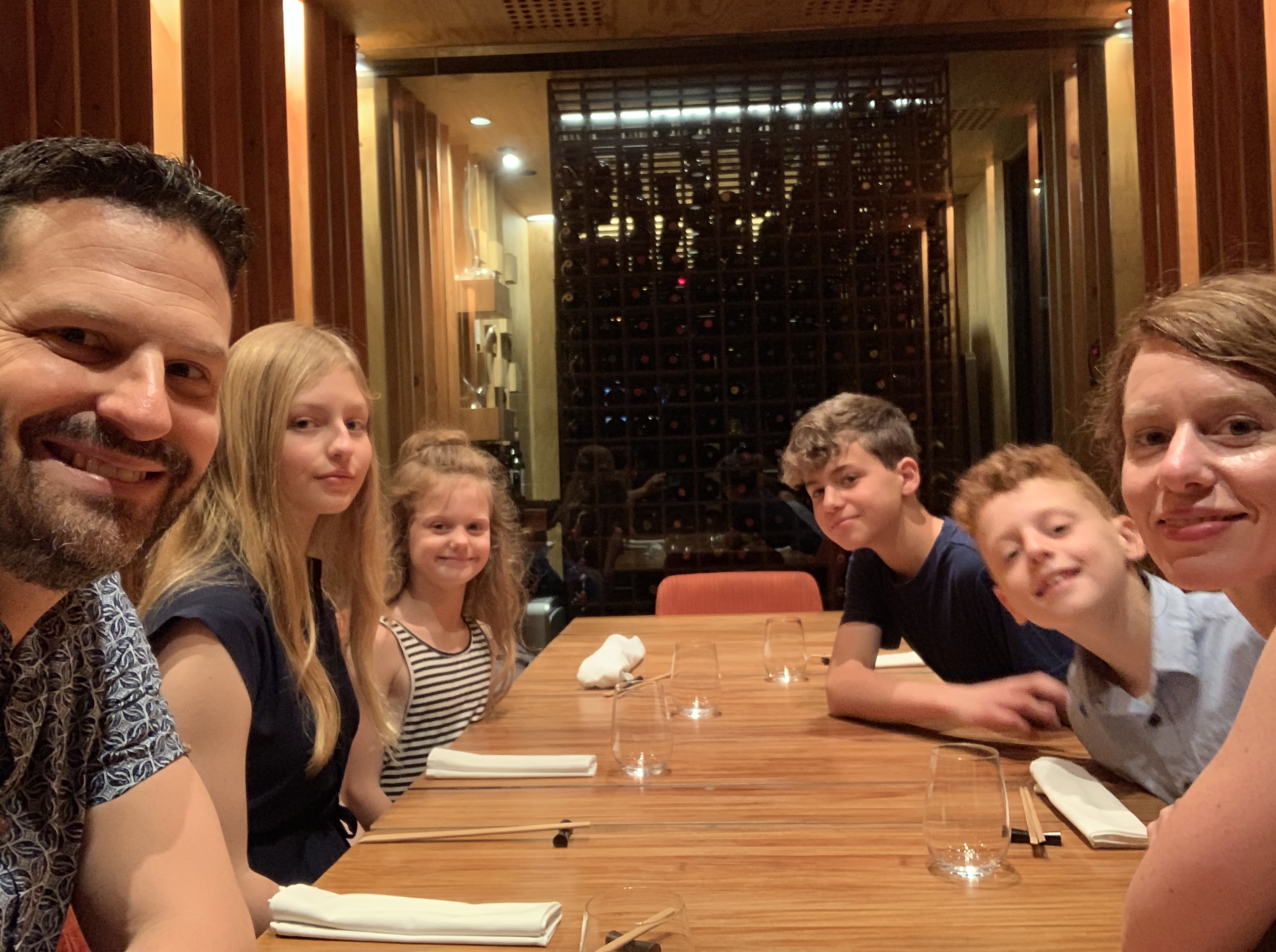

 produce guy
 Worst activity (per Erin and Aaron): Frequent conversations about how to be respectful to sculptures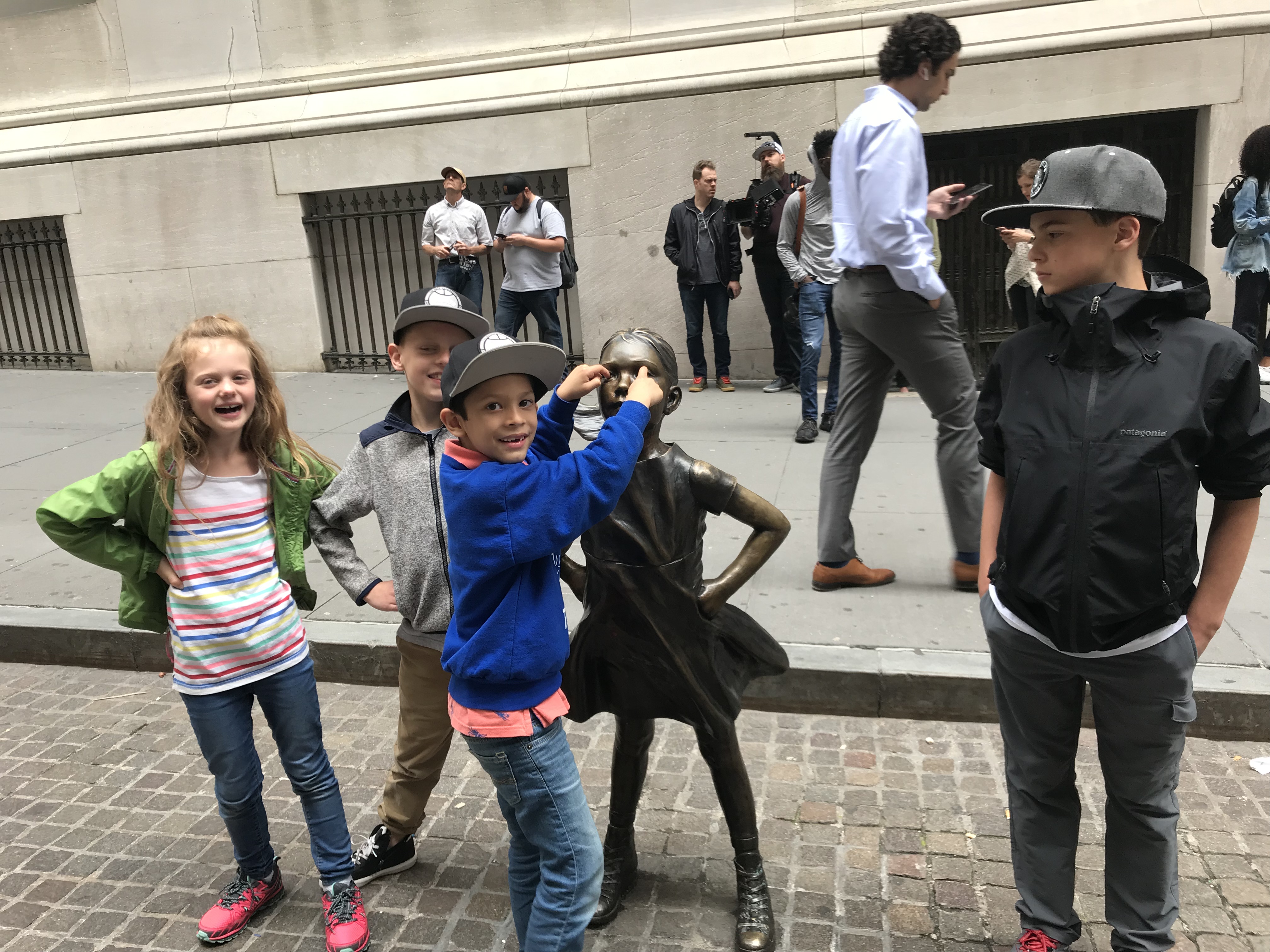



 Anderson’s go South...